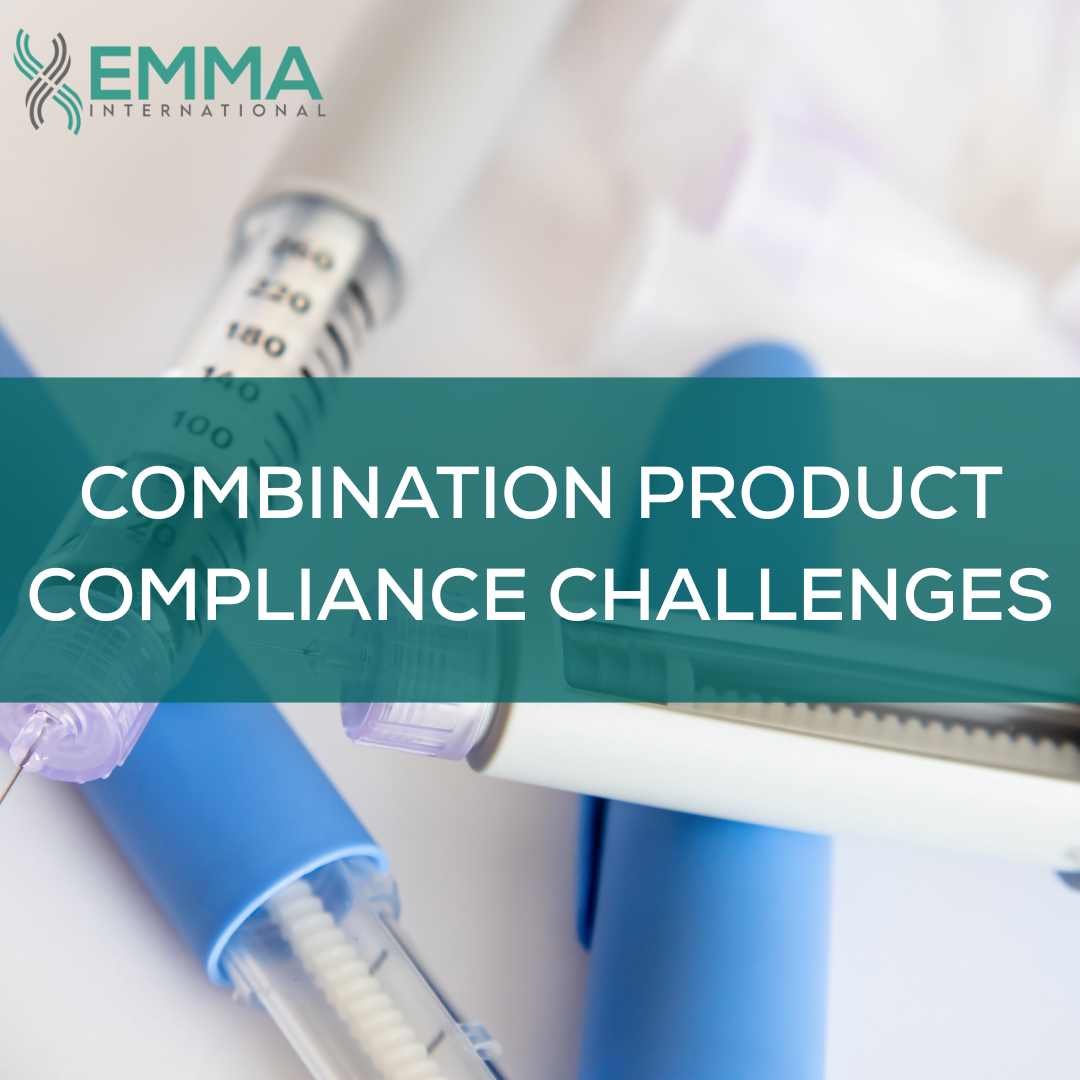
Combination products continue to reshape healthcare by integrating drugs, medical devices, and biologics into innovative therapies that improve patient outcomes and simplify treatment. Products such as prefilled syringes, autoinjectors, inhalers, drug-eluting stents, wearable injectors, and transdermal delivery systems have become increasingly common across the life sciences industry.
While these products offer significant clinical advantages, they also introduce a unique level of regulatory complexity. Unlike traditional pharmaceutical or medical device products, combination products must satisfy multiple regulatory frameworks simultaneously, requiring close collaboration between quality, regulatory affairs, engineering, manufacturing, and clinical teams. As regulatory agencies continue to emphasize quality systems, risk management, human factors, and lifecycle oversight, organizations must adopt integrated compliance strategies to successfully bring these products to market.
What Are Combination Products?
The U.S. Food and Drug Administration (FDA) defines a combination product as a therapeutic or diagnostic product composed of two or more regulated components, such as a drug and device, biologic and device, or drug and biologic. Some products may even combine all three component types into a single therapy.
Common examples include prefilled syringes, autoinjectors, insulin pens, inhalers, wearable infusion systems, drug-eluting stents, drug-coated balloons, and diagnostic devices that integrate multiple regulated technologies. Because these products combine different regulatory disciplines, manufacturers must ensure every component works together safely and effectively throughout the product’s lifecycle.
Why Combination Product Compliance Is More Complex
Traditional pharmaceutical products typically follow current Good Manufacturing Practice (cGMP) requirements outlined in 21 CFR Parts 210 and 211, while medical devices operate under the FDA’s Quality System Regulation, which is transitioning to the Quality Management System Regulation (QMSR) aligned with ISO 13485. Combination products often require organizations to comply with elements of both regulatory frameworks.
This overlap creates unique compliance challenges. Pharmaceutical companies may have limited experience with design controls or usability engineering, while medical device manufacturers may be less familiar with drug manufacturing controls, stability programs, or analytical testing requirements. Successfully managing combination products requires organizations to integrate quality systems, documentation practices, validation activities, and regulatory strategies into a single, cohesive framework.
Key Combination Product Compliance Challenges
One of the earliest challenges is determining which regulatory requirements apply to a product. Factors such as the product’s Primary Mode of Action (PMOA), intended use, product design, and marketing pathway all influence regulatory expectations. Misinterpreting these requirements can lead to unnecessary testing, submission delays, or deficiencies identified during agency review. Developing a clear regulatory strategy early in product development helps organizations avoid costly setbacks later.
Integrating pharmaceutical and medical device quality systems presents another significant challenge. Organizations that primarily manufacture drugs may not have established processes for design controls, design verification, human factors engineering, or maintaining Design History Files. Likewise, companies with a medical device background may need to strengthen their pharmaceutical quality systems by implementing more robust process validation, stability testing, cleaning validation, and analytical laboratory controls. A harmonized quality management system helps bridge these differences while ensuring compliance across applicable regulations.
Design controls are particularly important for combination products that incorporate medical device components. Regulators expect manufacturers to maintain documented processes throughout product development, beginning with user needs and design inputs and continuing through verification, validation, design transfer, and ongoing design changes. Complete and well-maintained documentation demonstrates that the product consistently meets its intended use and remains compliant throughout its lifecycle.
Human factors and usability engineering have also become increasingly important as more combination products are designed for patient self-administration. Whether patients are using an autoinjector at home or operating a wearable infusion device, manufacturers must ensure the product is intuitive and minimizes the potential for use-related errors. Human factors studies should evaluate how patients interact with the device, identify possible misuse scenarios, and verify that labeling and instructions adequately support safe operation. Conducting these evaluations early in development allows organizations to address usability concerns before they become regulatory issues.
Risk management extends beyond evaluating individual components. Manufacturers must understand how the drug and device interact and assess risks associated with drug delivery accuracy, mechanical reliability, sterility, packaging integrity, labeling, software functionality, and user error. Risk management should remain an ongoing process throughout the product lifecycle, incorporating complaint trends, post-market surveillance, and product performance data to identify emerging issues before they affect patients or compliance.
Manufacturing combination products introduces additional complexity because pharmaceutical production processes must work seamlessly alongside device assembly, sterilization, packaging, labeling, and functional testing. Each manufacturing step requires appropriate validation, while organizations must also evaluate equipment qualification, environmental controls, automated inspection systems, transportation validation, and packaging performance. Since modifications to one component can impact the overall product, effective change management becomes essential.
Supplier oversight is equally important. Combination products often rely on complex global supply chains involving pharmaceutical ingredients, device components, packaging materials, electronics, software, and contract manufacturing partners. Organizations should establish comprehensive supplier qualification programs that include risk-based audits, quality agreements, ongoing performance monitoring, and effective communication regarding supplier changes. A strong supplier quality program helps minimize disruptions while protecting product quality and regulatory compliance.
Preparing for Inspection Readiness
Health authority inspections increasingly focus on how organizations manage the complexity of combination products. Inspectors often evaluate whether companies have effectively integrated quality systems, implemented appropriate design controls, maintained thorough validation documentation, managed supplier quality, investigated complaints, and established effective CAPA programs.
Rather than preparing only when an inspection is announced, organizations should maintain inspection readiness as an ongoing operational practice. Keeping documentation complete, current, and readily accessible allows teams to respond confidently during inspections while demonstrating a mature quality culture.
How EMMA International Helps
Successfully developing and commercializing combination products requires expertise across pharmaceutical, biotechnology, and medical device regulations. EMMA International partners with life sciences organizations to build integrated compliance programs that support every stage of the product lifecycle.
Our consultants help organizations develop regulatory strategies, strengthen quality management systems, implement design controls, perform validation activities, improve supplier quality programs, support risk management initiatives, and prepare for health authority inspections. By taking a proactive approach to compliance, we help clients reduce regulatory risk while accelerating successful product commercialization.
Conclusion
Combination products represent one of the fastest-growing areas of the life sciences industry, delivering innovative therapies that improve patient care while introducing new regulatory challenges. Successfully managing these products requires organizations to integrate pharmaceutical and medical device quality systems, prioritize risk management and usability, maintain robust documentation, and foster collaboration across multiple functional areas.
As regulatory expectations continue to evolve, organizations that invest in sustainable compliance programs will be better positioned to bring innovative combination products to market while maintaining patient safety, product quality, and inspection readiness. EMMA International provides the expertise needed to navigate this complexity, helping life sciences organizations build compliant, efficient, and future-ready operations.
Contact EMMA International at 248-987-4497 or info@emmainternational.com to learn how our experts can support your compliance and regulatory goals.