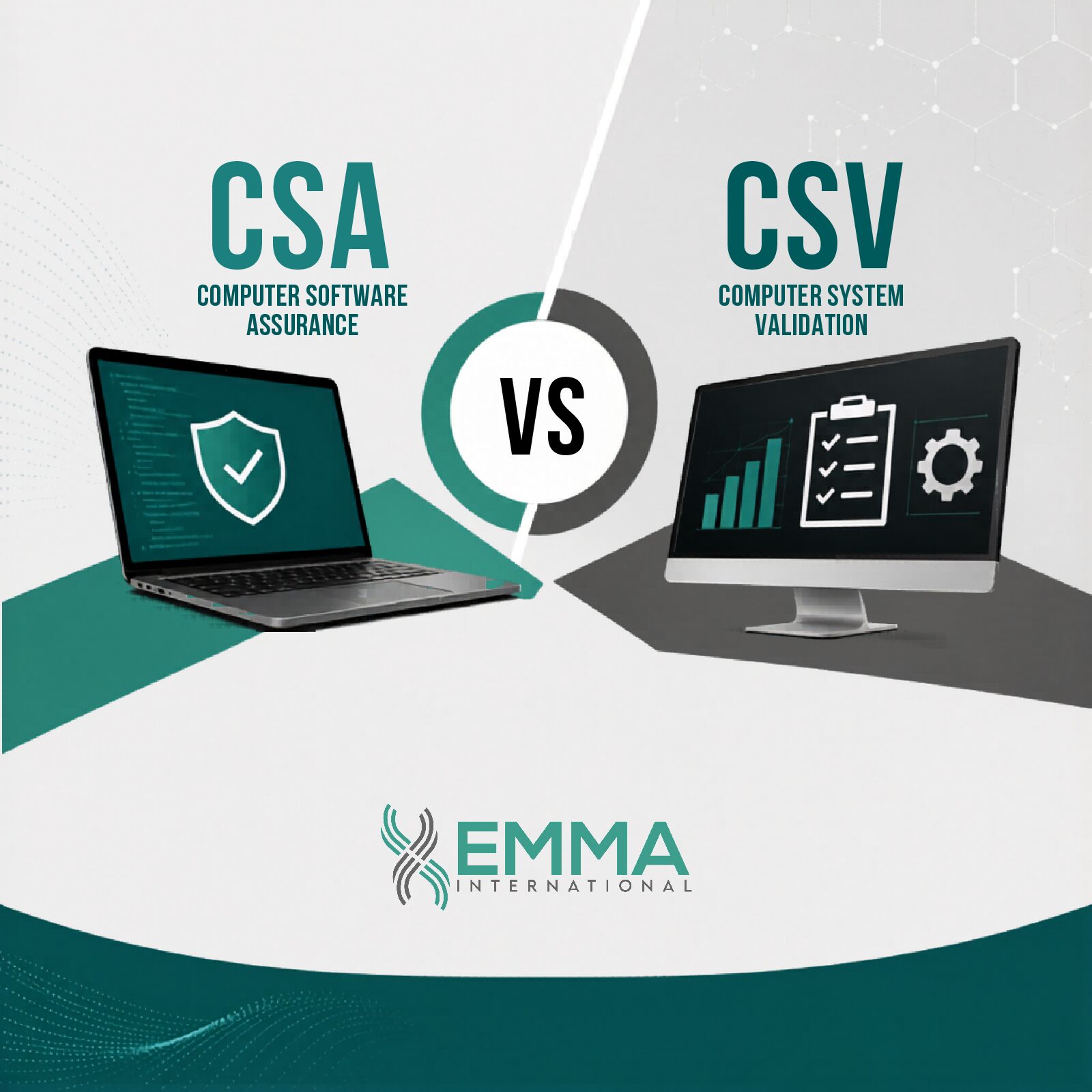
As digital transformation continues accelerating across the life sciences industry, organizations are increasingly modernizing the way computerized systems are implemented, tested, and maintained within regulated environments. One of the most significant shifts currently shaping the industry is the transition from traditional Computer System Validation (CSV) approaches toward the more risk-based Computer Software Assurance (CSA) framework.
For pharmaceutical, biotechnology, and medical device companies, understanding the differences between CSA and CSV is becoming increasingly important as organizations work to improve operational efficiency while maintaining regulatory compliance and data integrity.
At EMMA International, organizations are increasingly evaluating how CSA principles can support modernized validation strategies, streamline testing efforts, and strengthen digital transformation initiatives across regulated operations.
What Is Computer System Validation (CSV)?
Computer System Validation has long served as the traditional framework used to ensure computerized systems perform as intended within regulated environments. CSV approaches are designed to demonstrate that systems consistently meet predefined requirements and comply with applicable regulatory expectations.
Historically, CSV programs have relied heavily on:
- Extensive documentation
- Formalized testing protocols
- Detailed requirement traceability
- Prescriptive validation deliverables
- Large volumes of scripted testing
While CSV remains an important component of regulated quality systems, many organizations have found traditional validation approaches to be highly resource-intensive, time-consuming, and difficult to scale within rapidly evolving digital environments.
As technology adoption accelerates across manufacturing, quality, laboratory, and clinical systems, companies are increasingly seeking more agile and risk-based validation methodologies.
What Is Computer Software Assurance (CSA)?
Computer Software Assurance is a modernized approach introduced by the U.S. Food and Drug Administration that emphasizes critical thinking, risk-based decision-making, and assurance of intended system performance rather than excessive documentation.
CSA encourages organizations to focus validation activities on areas that directly impact:
- Patient safety
- Product quality
- Data integrity
- System reliability
Rather than relying solely on extensive scripted testing and documentation generation, CSA promotes more flexible assurance methods that prioritize high-risk functionality and operational understanding.
The goal is not to eliminate validation, but rather to make validation activities more efficient, meaningful, and aligned with actual system risk.
Key Differences Between CSA and CSV
Risk-Based Focus
One of the most significant differences between CSA and traditional CSV approaches is the emphasis on risk-based thinking.
Under CSA, organizations focus validation efforts on critical system functions that directly impact regulated processes, product quality, or patient safety. Lower-risk functions may require less formal testing and documentation.
This allows organizations to allocate resources more strategically while improving overall validation efficiency.
Critical Thinking Over Documentation Volume
Traditional CSV programs often emphasize producing large quantities of documentation to demonstrate compliance.
CSA shifts the focus toward demonstrating system assurance through critical thinking, scientific rationale, and effective testing strategies rather than relying primarily on documentation volume.
Organizations are encouraged to generate documentation that provides meaningful value rather than documentation created solely for compliance purposes.
Flexible Testing Approaches
CSA supports more flexible testing methodologies, including:
- Unscripted testing
- Ad hoc testing
- Exploratory testing
- Automated testing approaches
- Risk-based test strategies
This flexibility allows organizations to better adapt validation activities to modern software development environments and rapidly evolving technologies.
As companies continue modernizing digital infrastructure, many are integrating CSA initiatives into broader Digital, Data & FinTech Advisory programs to improve scalability, operational agility, and compliance oversight.
CSA Still Requires Strong Governance
Although CSA promotes streamlined validation approaches, organizations remain fully responsible for maintaining compliant computerized systems and strong quality oversight.
CSA does not reduce regulatory expectations surrounding:
- Data integrity
- Change management
- Access controls
- Audit trails
- System security
- Lifecycle management
- Periodic review
- Vendor oversight
Organizations implementing CSA frameworks must still maintain robust governance structures capable of supporting inspection readiness and long-term operational control.
Many organizations integrate these governance activities into broader Enterprise Quality & Risk Management strategies to strengthen compliance oversight across increasingly digital operations.
Preparing for the Future of Validation
As life sciences companies continue adopting cloud platforms, AI-enabled systems, connected manufacturing technologies, and advanced analytics tools, validation approaches must evolve alongside the technology itself.
CSA represents an important step toward more modern, scalable, and risk-focused validation methodologies capable of supporting today’s digital environments without compromising compliance expectations.
Regulatory agencies including the European Medicines Agency and global health authorities continue emphasizing the importance of data integrity, system reliability, and quality oversight regardless of the validation methodology used. Organizations should therefore approach CSA implementation thoughtfully, ensuring modernization efforts remain aligned with existing GxP expectations.
Successfully transitioning from traditional CSV models toward CSA-based frameworks often requires cross-functional alignment across quality, validation, IT, engineering, and operational teams. Through services including Operational Excellence & Performance Improvement consulting, Regulatory & Compliance Support, and Global Market Entry & Expansion Strategy services, EMMA International continues supporting organizations as they modernize validation strategies and navigate the future of digital compliance within regulated industries.