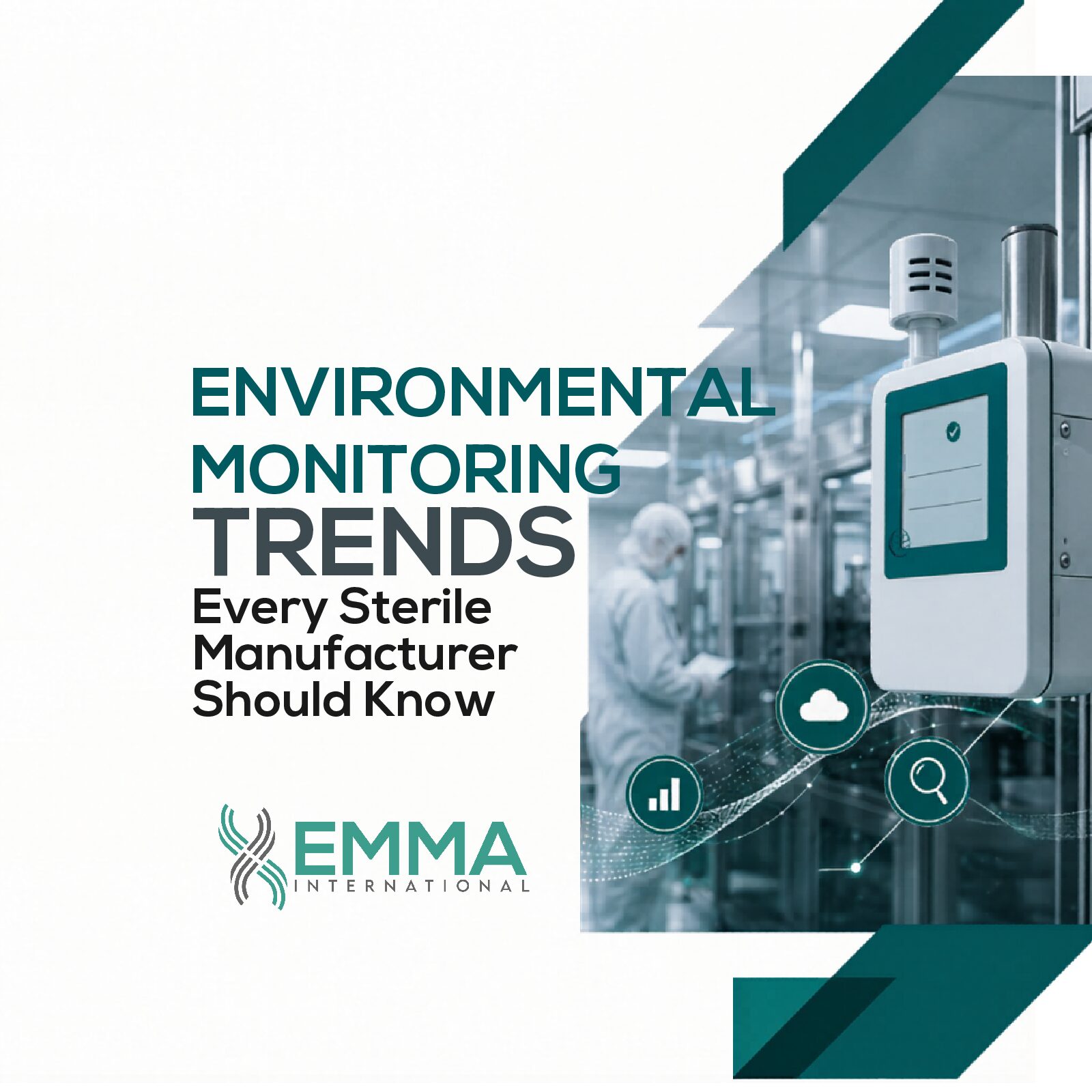
As sterile manufacturing operations become increasingly complex, environmental monitoring programs are evolving alongside them. Regulators now expect manufacturers to demonstrate a higher level of scientific understanding, operational oversight, and contamination control than ever before.
While traditional environmental monitoring activities remain foundational, emerging technologies, evolving regulatory expectations, and greater emphasis on proactive quality management are reshaping how sterile manufacturers approach contamination control.
Organizations that fail to modernize environmental monitoring strategies may face increased regulatory risk, operational inefficiencies, and greater challenges maintaining inspection readiness.
Several key trends are now defining the future of environmental monitoring within sterile manufacturing environments.
Rapid Microbial Identification Is Gaining Momentum
Traditional microbial identification methods often require several days before organisms can be fully identified. While these methods remain widely used throughout the industry, delayed results can slow investigations, prolong manufacturing decisions, and limit an organization’s ability to respond quickly to contamination events.
As a result, many sterile manufacturers are evaluating rapid microbial identification technologies to improve contamination response capabilities.
Rapid identification systems can help organizations:
- Accelerate root cause investigations
- Respond more quickly to excursions
- Better understand recurring flora
- Improve contamination trending
- Reduce manufacturing delays
- Support faster product impact assessments
The ability to identify organisms earlier can significantly improve contamination control decision-making.
For example, quickly determining whether an environmental isolate represents normal flora or a potentially objectionable organism may influence cleaning strategies, batch evaluations, and escalation procedures.
Although rapid microbial technologies continue to evolve, regulators increasingly recognize their value when appropriately validated and implemented within contamination control programs.
Utility Systems Are Receiving Greater Regulatory Attention
Environmental monitoring programs are no longer limited to cleanroom surfaces and air sampling activities. Supporting utility systems are increasingly recognized as essential contributors to sterile manufacturing control.
Inspectors now frequently evaluate how organizations monitor and trend systems such as:
- Water for Injection (WFI)
- Purified water systems
- Clean steam
- Compressed gases
- HVAC systems
- Differential pressure systems
- Temperature and humidity controls
Manufacturers are expected to demonstrate ongoing oversight of these systems as part of the broader contamination control strategy.
Utility-related environmental excursions can directly impact sterile manufacturing operations and product quality. As a result, regulators expect organizations to establish effective monitoring, maintenance, investigation, and trending programs surrounding critical utilities.
In many inspections, deficiencies involving utilities are viewed as indicators of broader quality system weaknesses.
Organizations should ensure environmental monitoring programs are appropriately integrated with facility engineering, validation, and maintenance functions to maintain effective contamination control oversight.
Continuous Monitoring and Automation Are Expanding
The sterile manufacturing industry continues moving toward increased automation and digital integration.
Environmental monitoring programs are increasingly incorporating technologies such as:
- Continuous viable monitoring
- Continuous non-viable particle monitoring
- Automated data collection systems
- Integrated environmental monitoring software
- Digital trend analysis platforms
- Real-time alarm systems
These technologies provide manufacturers with greater visibility into environmental conditions and may improve response times when excursions occur.
Continuous monitoring systems can help organizations:
- Detect contamination events earlier
- Reduce manual documentation errors
- Improve data integrity
- Strengthen investigation capabilities
- Enhance operational efficiency
- Support proactive contamination management
However, automation alone does not guarantee compliance.
Regulators continue to emphasize that technology should support, not replace, strong procedures, scientific understanding, and effective quality oversight.
Organizations implementing automated systems must still ensure:
- Appropriate system validation
- Data integrity controls
- Defined response procedures
- Personnel training
- Alarm management processes
- Effective investigation practices
The most successful environmental monitoring programs combine advanced technology with strong operational discipline.
Data Integrity Expectations Continue to Increase
As environmental monitoring systems become more digital, regulators are placing greater emphasis on data integrity and electronic records management.
Manufacturers are expected to maintain complete, accurate, attributable, and secure environmental monitoring data throughout the data lifecycle.
Areas of regulatory focus often include:
- Audit trail review practices
- Electronic system access controls
- Data backup and retention
- Alarm management documentation
- Manual data transcription practices
- System validation
- User permissions and security
Organizations relying heavily on manual spreadsheets or disconnected systems may face additional scrutiny if they cannot demonstrate strong oversight and control of environmental monitoring records.
Data integrity concerns within environmental monitoring programs may raise broader questions about the effectiveness of a company’s quality systems and operational governance.
Inspection Readiness Is Becoming a Continuous Activity
Environmental monitoring programs now play a major role in inspection readiness efforts.
During inspections, regulators frequently evaluate whether manufacturers can clearly explain:
- How sampling locations were selected
- Why monitoring frequencies were established
- How trends are evaluated
- How recurring excursions are managed
- How personnel qualification supports contamination control
- How investigations assess product impact
- How environmental monitoring integrates into the contamination control strategy
Inspectors increasingly expect organizations to demonstrate deep process understanding rather than relying solely on procedural compliance.
Companies that maintain inspection readiness as an ongoing operational mindset tend to perform more effectively during regulatory interactions.
This includes conducting periodic program assessments, reviewing environmental monitoring effectiveness, updating risk assessments, and continuously improving contamination control practices.
The Future of Environmental Monitoring
Environmental monitoring expectations will continue evolving as sterile manufacturing technologies, regulatory frameworks, and contamination control strategies advance.
Manufacturers that invest in modern, science-driven environmental monitoring programs position themselves more effectively to:
- Reduce contamination risk
- Improve product quality
- Enhance operational efficiency
- Strengthen inspection readiness
- Support patient safety
- Maintain long-term regulatory compliance
Environmental monitoring is no longer a passive quality function. It is now a strategic operational system that directly supports sterile manufacturing performance and product protection.
At EMMA International, we support pharmaceutical, biotechnology, and medical device organizations with contamination control strategy development, environmental monitoring assessments, aseptic processing support, regulatory remediation, and inspection readiness initiatives across global regulated environments.
Whether your organization is preparing for Annex 1 implementation, modernizing environmental monitoring systems, strengthening contamination control strategies, or responding to recurring environmental excursions, our team provides the technical and operational expertise needed to move forward with confidence.
Ready to strengthen your environmental monitoring and contamination control strategy?
Connect with our team: Contact EMMA International