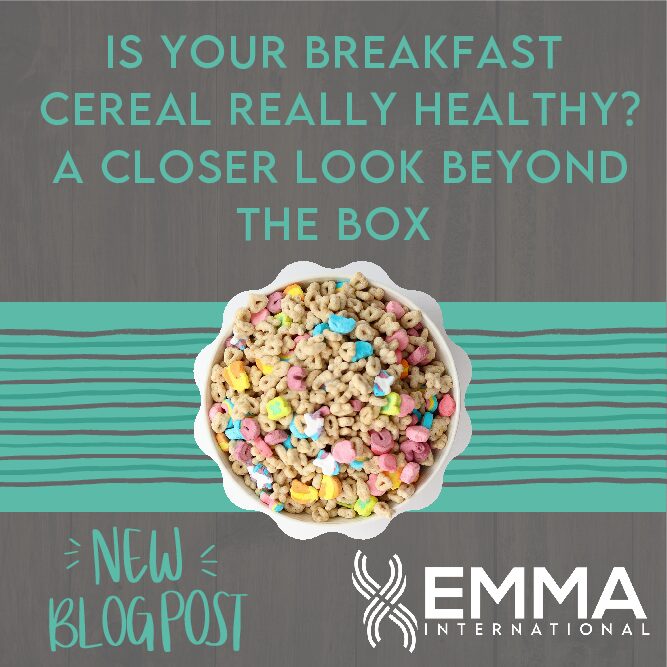
For decades, ready-to-eat cereals have been marketed as the cornerstone of a “healthy breakfast.” Bright packaging, celebrity endorsements, and claims like “heart healthy” or “part of a balanced diet” line grocery store shelves. But recent studies suggest that many of these cereals may not live up to their healthy image—and for consumers, this raises important questions about transparency in nutrition labeling and food marketing.
At EMMA International, we often talk about the importance of clarity, integrity, and compliance in life sciences. The same principles apply to the food industry, where regulatory oversight and honest communication directly impact public trust.
What the Research Shows
A 2025 study reviewed more than 600 breakfast cereals and found that many of the top-selling brands—those most familiar to American households—were high in sugar, low in protein, and often lacking the fiber and nutrient density advertised.
Key findings include:
- Portion Size vs. Reality: While nutrition labels typically suggest 120–150 calories per serving, the amount poured into a bowl is often double that, pushing real-world calorie counts closer to 300 or more.
- Hidden Sugars & Additives: Popular cereals like Frosted Flakes, Lucky Charms, and Cinnamon Toast Crunch contain high amounts of sugar and sodium, with relatively little protein or healthy fat.
- Health Claims vs. Content: Terms like “all natural” or “fortified with vitamins” can create a health halo, even when the core product is largely refined grains and sugar.
Even cereals marketed to children have trended in the wrong direction. Between 2010 and 2023, new or reformulated products actually increased in sugar, sodium, and fat, while decreasing in fiber and protein.
Why It Matters for Consumers
Breakfast isn’t just another meal—it sets the tone for energy, focus, and metabolism throughout the day. A sugary, low-protein cereal may spike energy in the short term, only to lead to a crash later in the morning. For children, this can directly affect concentration and learning; for adults, it may contribute to fatigue and poor dietary choices later in the day.
Health experts recommend looking beyond marketing claims and focusing on the nutrition label. A healthier cereal should:
- List whole grains as the first ingredient.
- Contain at least 2.5–5 grams of fiber per serving.
- Limit added sugars and sodium.
- Stay around 150 calories per measured serving.
- Keep the ingredient list short and recognizable.
Examples that meet these criteria include Shredded Wheat, Kashi Go Lean, Cheerios, and All-Bran.
The Bigger Picture: Labeling and Trust
Just as FDA guidance requires clear, accurate labeling for drugs and biologics, consumers deserve the same level of honesty when it comes to their food. Misleading claims—whether intentional or through omission—undermine trust and can have long-term impacts on public health.
For regulators and industry, the challenge is striking the balance between marketing appeal and transparency. For consumers, the challenge is learning to cut through the noise and make informed choices.
EMMA International’s Perspective
At EMMA International, we help life sciences companies navigate complex regulatory requirements with clarity and accountability. The cereal example is a reminder that whether you’re developing a biologic, a medical device, or a food product, honest labeling and evidence-based claims are essential.
Just as we guide our clients through evolving FDA and international requirements, consumers can benefit from applying the same mindset to their daily choices: ask questions, look at the details, and focus on quality inputs for the best long-term outcomes.
For more information on how EMMA International can assist, visit www.emmainternational.com. Contact EMMA International at (248) 987-4497 or by email at info@emmainternational.com to learn more.
References:
Nutritional Content of Ready-to-Eat Breakfast Cereals Marketed to Children. (2025). JAMA Network Open. https://jamanetwork.com/journals/jamanetworkopen/fullarticle/2834355 JAMA Network
Shmerling, R. H. (2025, September 8). Is your breakfast cereal healthy? Harvard Health Publishing. https://www.health.harvard.edu/blog/is-your-breakfast-cereal-healthy-202509083104ober 2). Euro Roundup: Joint HMA-EMA group starts consultation into priorities for AI in research and regulation. Regulatory Affairs Professionals Society.
European Medicines Agency. (2025, September). Draft guidelines and concept paper for stakeholder consultation. EMA.onal.com to learn more.