
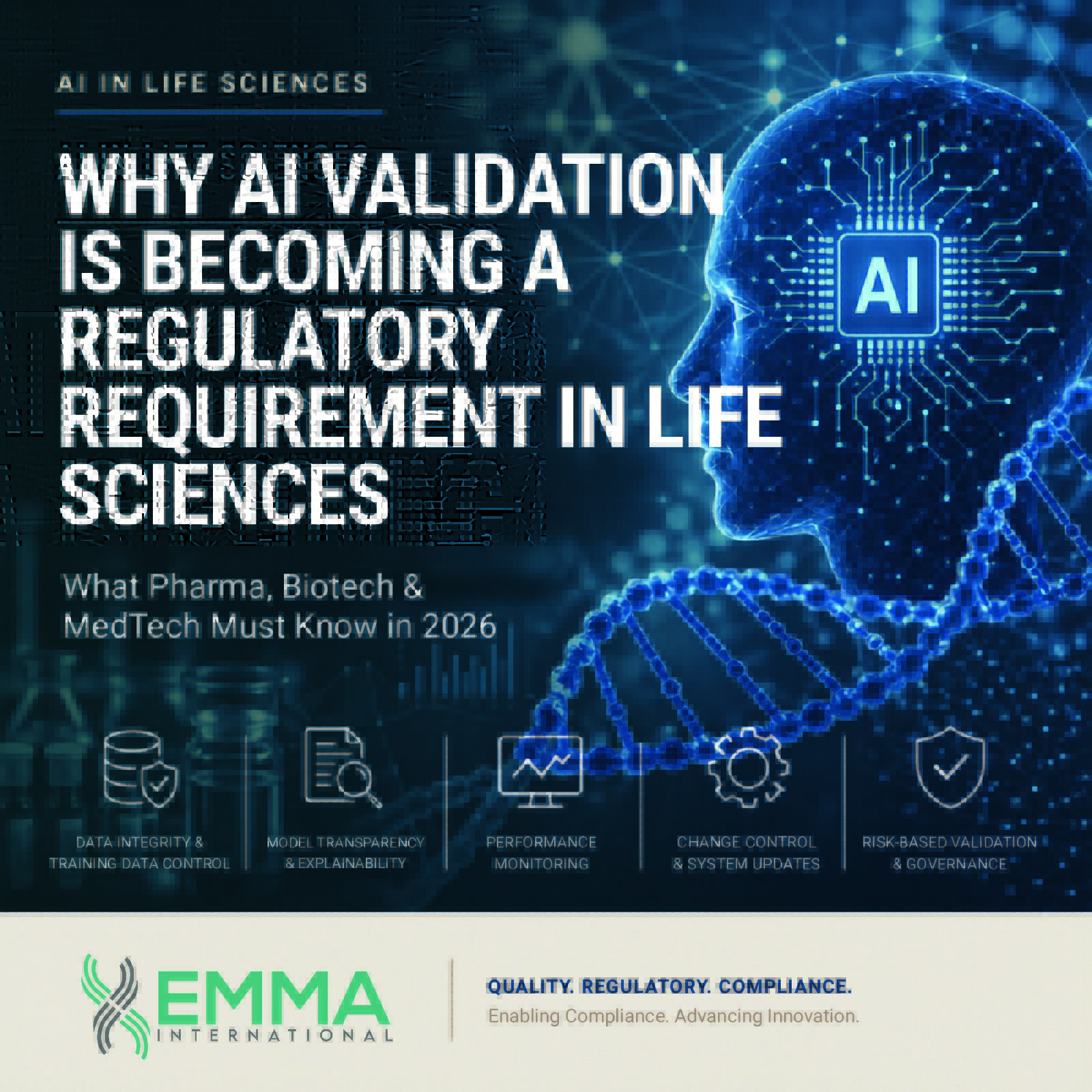
Artificial intelligence is becoming embedded across clinical development, manufacturing, and quality operations. From predictive models to automated decision-support tools, organizations are increasingly relying on AI to drive efficiency and insight.
At the same time, regulators are placing greater scrutiny on how these systems are developed, validated, and controlled. In 2026, AI is no longer viewed as experimental—it is being evaluated as part of core regulated processes.
Regulatory Expectations Are Evolving with Technology
Traditional validation approaches were designed for systems with fixed logic and predictable outputs. AI introduces variability, continuous learning, and reliance on large datasets, which changes how systems must be assessed.
Regulators are now focused on whether organizations can demonstrate that AI outputs are reliable, consistent, and supported by controlled data. This includes understanding how models are trained, how decisions are generated, and how performance is maintained over time.
Without this level of oversight, AI systems can introduce compliance and product quality risks.
Key Areas of Regulatory Focus
Regulatory agencies are aligning expectations around several core areas when evaluating AI systems:
- Data integrity and training data control to ensure outputs are based on reliable inputs
- Model transparency so decisions can be explained and justified
- Performance monitoring to detect drift or inconsistencies over time
- Change control for updates, retraining, and system modifications
- Risk-based validation aligned to the system’s impact on regulated decisions
These expectations reflect a broader shift toward ensuring that advanced technologies remain under structured control within regulated environments.
Common Gaps in AI Implementation
Many organizations adopt AI quickly but lack the governance needed to support it in a compliant way. This often leads to:
- Limited documentation of model development and validation
- Unclear ownership of AI systems and outputs
- Inconsistent data sources across platforms
- Gaps in monitoring model performance over time
- Misalignment between AI tools and existing quality systems
These gaps can result in inspection findings, delayed approvals, or increased regulatory scrutiny.
Strengthening AI Validation Strategies
Organizations can reduce risk by implementing structured validation approaches tailored to AI systems.
This includes establishing clear documentation of model development, defining ownership and accountability, and ensuring that data used for training and testing is controlled and traceable. Ongoing monitoring is also critical to confirm that performance remains consistent as systems evolve.
Integrating AI into existing quality systems—such as change control and risk management—helps ensure that validation is not treated as a one-time activity, but as part of a continuous lifecycle.
How EMMA International Supports AI Validation
At EMMA International, we support organizations in implementing AI systems that align with global regulatory expectations. Our teams help design validation strategies, establish governance frameworks, and integrate AI into existing quality systems.
From risk assessments to lifecycle management, we enable organizations to adopt advanced technologies while maintaining compliance, operational control, and regulatory confidence.
For more information on how EMMA International can assist, visit www.emmainternational.com or contact us at (248) 987-4497 or info@emmainternational.com.
References
U.S. Food and Drug Administration. Artificial Intelligence and Machine Learning in Software as a Medical Device.
European Medicines Agency. AI Workplan and Digital Strategy.
Regulatory Affairs Professionals Society (RAPS). AI Validation and Governance in Regulated Industries.