
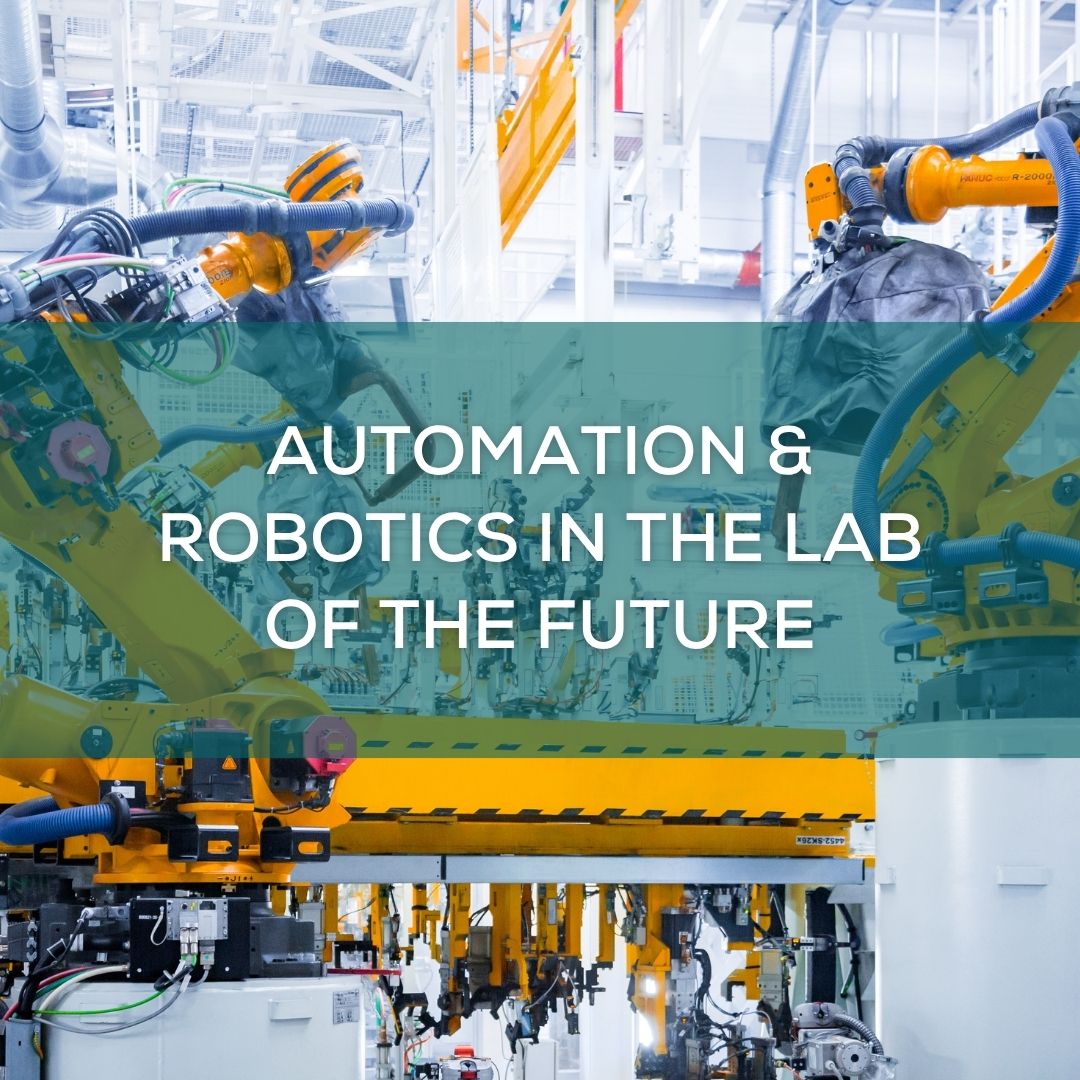
Life sciences laboratories are evolving rapidly as organizations seek greater efficiency, consistency, and scalability. Automation and robotics are becoming central to this transformation, helping laboratories manage growing testing volumes, complex workflows, data-intensive processes, and increasing regulatory expectations.
The lab of the future is not simply a collection of advanced instruments. It is a connected environment where people, automated systems, robotics, software, and quality processes work together. When implemented effectively, these technologies can reduce manual effort, improve data reliability, and allow laboratory personnel to focus on scientific analysis and higher-value decision-making.
However, introducing automation into a regulated laboratory requires careful planning. Technology must be integrated into the laboratory’s quality system, validated for its intended use, and supported throughout its lifecycle.
What Is Laboratory Automation?
Laboratory automation uses technology to perform or support tasks that would otherwise require manual intervention. Automation can range from a single instrument that performs repetitive activity to a fully connected workflow that manages samples, testing, data analysis, and reporting.
Common applications include:
- Automated sample preparation
- Liquid handling and dispensing
- Robotic sample transport
- High-throughput screening
- Automated incubation and storage
- Environmental monitoring
- Laboratory inventory management
- Instrument calibration and maintenance tracking
- Data collection and analysis
- Electronic record generation
- Automated quality control testing
Robotics often serve as the physical component of laboratory automation. Robotic systems can move samples, operate equipment, prepare materials, and complete repetitive tasks with a high level of precision.
Together, automation and robotics can create more standardized workflows while reducing dependence on manual processes.
Why Life Sciences Laboratories Are Embracing Automation
Traditional laboratory operations frequently rely on manual data entry, paper records, repeated sample handling, and time-consuming administrative tasks. These activities can slow testing, introduce variability, and increase the possibility of human error.
Automation can help laboratories address these challenges by improving consistency and allowing processes to operate at greater speed and scale.
Potential benefits include:
- Increased testing capacity
- Greater process consistency
- Reduced manual transcription
- Improved sample traceability
- Faster turnaround times
- Better use of laboratory personnel
- More reliable data capture
- Improved workplace safety
- Reduced contamination risk
- Greater visibility into laboratory performance
Automation may be especially valuable for repetitive, high-volume, or ergonomically demanding activities. By assigning these tasks to automated systems, laboratory personnel can spend more time interpreting results, investigating trends, developing methods, and solving complex scientific problems.
The Role of Robotics in the Modern Laboratory
Laboratory robotics can perform tasks with a level of repeatability that may be difficult to maintain through manual execution. Robotic arms, automated liquid handlers, mobile robots, and intelligent storage systems are already being used across pharmaceutical, biotechnology, medical device, and diagnostic laboratories.
For example, a robotic system may receive a sample, scan its identification, transport it to the appropriate instrument, initiate testing, and route the resulting data to a laboratory information management system. This can reduce the number of manual transfers and create a more complete record of the sample’s journey.
Collaborative robots, sometimes called cobots, are also expanding the possibilities for laboratory automation. These systems are designed to work alongside laboratory personnel and may be used for activities that require a combination of automated precision and human judgment.
The selection of robotic technology should be based on the laboratory’s actual needs, workflow risks, space limitations, and regulatory requirements. Automation should solve a defined problem rather than simply introduce new technology.
Creating a Connected Laboratory Ecosystem
The greatest value of laboratory automation often comes from system integration. A laboratory may use advanced instruments, but if employees must manually transfer data between systems, the overall process may still be inefficient and vulnerable to error.
The lab of the future may connect:
- Laboratory Information Management Systems
- Electronic Laboratory Notebooks
- Scientific Data Management Systems
- Manufacturing Execution Systems
- Enterprise Resource Planning platforms
- Quality Management Systems
- Instrument software
- Environmental monitoring systems
- Data analytics platforms
- Cloud-based applications
This connected ecosystem can create a more complete view of laboratory activities. Samples, test methods, specifications, results, deviations, and approvals can be linked through controlled digital workflows.
However, integration also introduces complexity. Organizations must understand how data moves between systems, how records are modified, and which system serves as the official source of information.
Data Integrity in Automated Laboratories
Automation can reduce some data integrity risks, particularly those related to manual transcription. It does not eliminate the need for strong data governance.
Automated laboratories may generate large volumes of data across multiple systems and instruments. Organizations must ensure that data remain accurate, complete, consistent, secure, and available throughout the required retention period.
Important considerations include:
- User access and role-based permissions
- Unique user accounts
- Audit trail generation and review
- Electronic signatures
- Data backup and recovery
- Record retention
- System time synchronization
- Metadata preservation
- Data transfer controls
- Cybersecurity protections
- Management of system interfaces
Laboratories should be able to reconstruct the complete history of a test, including who initiated it, which method was used, what changes were made, how results were evaluated, and who approved the final record.
When automated systems make calculations or decisions, the underlying logic should also be documented, tested, and controlled.
Validation and Regulatory Compliance
Automated and robotic systems used in regulated laboratory activities must be suitable for their intended use. Validation provides documented evidence that a system consistently performs according to its approved requirements.
A risk-based validation approach should consider:
- The system’s intended use
- Product quality and patient safety impact
- Data integrity risk
- Workflow complexity
- System interfaces
- Automated calculations
- Decision-making functions
- Supplier documentation
- Configurable and customized features
- Failure modes and recovery procedures
User requirements should be established before the system is selected or configured. These requirements should describe what the system must do, how it will be used, what records it will create, and which controls are necessary.
Testing should confirm that critical functions operate correctly under normal and abnormal conditions. Validation should also address user access, audit trails, data transfer, backup, recovery, alarms, and error handling.
Validation does not end when the system enters production. Automated technologies must be maintained in a validated state through controlled changes, periodic reviews, preventive maintenance, calibration, security updates, and performance monitoring.
Managing Change in the Automated Laboratory
Introducing automation can significantly change how employees perform their work. A process that once depended on manual actions may become a combination of automated steps, system alerts, exception handling, and human review.
These changes should be evaluated through the organization’s change control process. The assessment should consider potential effects on:
- Standard operating procedures
- Test methods
- Validation documentation
- Facility layout
- Utilities and environmental conditions
- Employee roles and responsibilities
- Training requirements
- Data flows
- Cybersecurity
- Business continuity
- Regulatory submissions or commitments
Change management should also address employee concerns. Some personnel may worry that robotics will replace their roles or reduce the importance of their expertise. Leadership should communicate that automation changes how work is performed, while scientific knowledge and human oversight remain essential.
Employees need appropriate training to operate automated systems, respond to alarms, manage exceptions, review generated data, and recognize when a process is not performing as intended.
Human Oversight Remains Essential
Although automation can improve efficiency and consistency, it should not remove meaningful human oversight. Automated systems can execute programmed activities, but laboratory personnel remain responsible for evaluating whether results are scientifically valid and whether the process operated as expected.
Human review is particularly important when:
- Results are unexpected or out of specification
- System alarms or errors occur
- Samples are damaged or incorrectly handled
- Instrument performance changes
- Data transfers fail
- Automated calculations produce unusual outcomes
- Processes require interpretation or scientific judgment
Organizations should define which decisions may be automated and which require human review. These responsibilities should be documented in procedures and reflected in system access and approval workflows.
The goal is not to remove people from the laboratory. It is to position them where their expertise creates the greatest value.
Cybersecurity and Business Continuity
As laboratories become more connected, cybersecurity becomes increasingly important. An incident affecting laboratory systems could disrupt testing, compromise sensitive data, or delay product release.
Cybersecurity controls should be built into the automation strategy from the beginning. Organizations should evaluate system architecture, network connections, remote access, user privileges, software updates, vendor support, and vulnerability management.
Laboratories must also prepare for system failures. Business continuity plans should explain how critical activities will continue if an automated instrument, robotic platform, network, or supporting software becomes unavailable.
Contingency procedures may include:
- Manual backup processes
- Alternative equipment
- Redundant systems
- Data restoration procedures
- Emergency vendor support
- Defined escalation paths
- Recovery testing
These plans should be practical, documented, and periodically tested.
Developing a Practical Automation Strategy
Successful laboratory automation begins with a clear business and quality objective. Organizations should first evaluate existing workflows to identify bottlenecks, repetitive tasks, error-prone activities, and opportunities for improved data management.
A practical implementation strategy may include the following steps:
1. Assess Current Laboratory Processes
Document how samples, materials, information, and approvals move through the laboratory. Identify delays, repeated data entry, manual transfers, and compliance risks.
2. Prioritize High-Value Opportunities
Focus first on processes where automation can provide measurable improvements in quality, capacity, safety, or turnaround time.
3. Define User and Regulatory Requirements
Establish clear requirements for system performance, data integrity, security, validation, integration, and ongoing support.
4. Evaluate Vendors Carefully
Review the supplier’s technical capabilities, quality practices, documentation, support model, cybersecurity controls, and experience in regulated environments.
5. Begin with a Controlled Pilot
A limited pilot can help the organization evaluate technology, refine workflows, and identify risks before expanding across the laboratory.
6. Validate and Train
Complete risk-based validation and ensure employees understand how to operate, monitor, and maintain the system.
7. Measure Performance
Monitor whether automation achieves the intended improvements. Useful metrics may include testing capacity, turnaround time, error rates, system downtime, deviations, and user adoption.
8. Scale Strategically
Expand automation based on demonstrated value, operational readiness, available resources, and the organization’s long-term digital strategy.
Preparing for the Lab of the Future
The lab of the future will likely be more connected, data-driven, and automated. Artificial intelligence, advanced analytics, robotics, cloud platforms, and digital laboratory systems will continue to influence how scientific work is performed.
Organizations that want to prepare for this future should begin by strengthening their current processes. Automating an inefficient or poorly controlled workflow may only reproduce its weaknesses at a greater speed.
Before implementing new technology, laboratories should confirm that processes are standardized, responsibilities are clear, data are governed effectively, and quality controls are integrated into the workflow.
The most successful laboratories will approach automation as an operational and quality transformation, not simply a technology purchase.
Conclusion
Automation and robotics offer significant opportunities for life sciences laboratories to improve efficiency, consistency, scalability, safety, and data reliability. Their value depends on thoughtful implementation, effective validation, strong data governance, trained personnel, and continued human oversight.
By aligning automation initiatives with quality objectives and regulatory requirements, organizations can build connected laboratories that support scientific innovation while maintaining compliance.
EMMA International helps life sciences organizations evaluate laboratory workflows, implement digital and automated technologies, validate computerized systems, strengthen data integrity, and manage regulatory risk. Contact us to learn how our experts can help your organization prepare for the lab of the future.