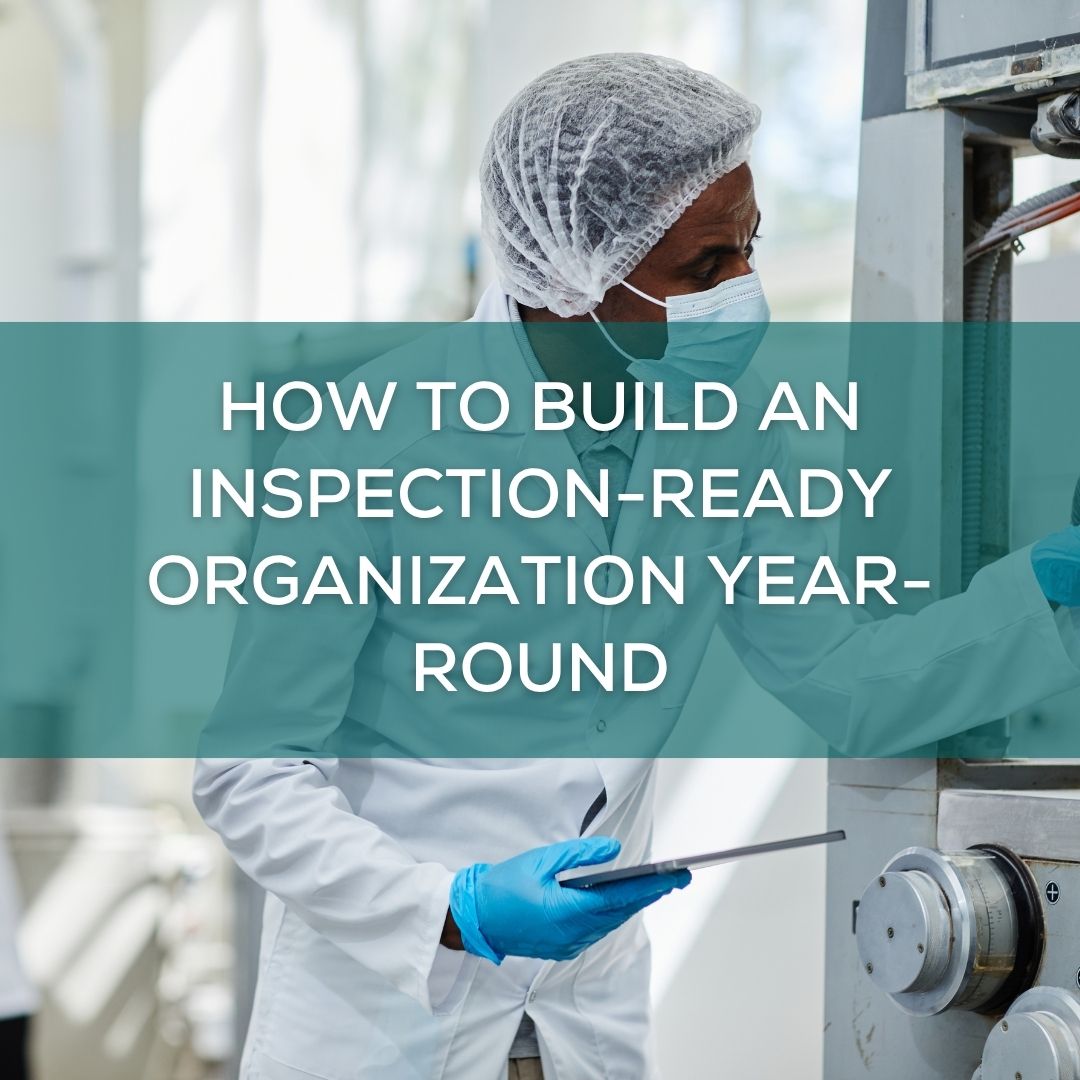
Regulatory inspections are not isolated events. They are a test of how well an organization operates every day.
When inspection readiness is treated as a last-minute project, teams often scramble to locate records, close overdue actions, refresh employee training, and correct documentation issues before an investigator arrives. That approach may address a few visible gaps, but it rarely resolves the underlying weaknesses that create regulatory risk.
A truly inspection-ready organization takes a different approach. It builds compliance into routine operations so that processes, records, facilities, systems, and employees are prepared for regulatory scrutiny at any time. This does not mean operating in a constant state of anxiety. It means creating a quality culture in which reliable execution and clear evidence are part of normal business.
Inspection Readiness Is an Organizational Capability
Inspection readiness is sometimes viewed as the responsibility of the Quality unit. In practice, an inspection can reach across nearly every regulated function, including manufacturing, laboratory operations, clinical operations, engineering, validation, regulatory affairs, information technology, supply chain, and executive leadership.
Regulators do not evaluate procedures in isolation. They look for evidence that the organization understands its processes, controls risk, investigates problems, protects data integrity, and takes effective action when performance falls short. FDA describes current good manufacturing practice requirements as a system of processes, controls, and quality oversight intended to produce quality products and identify potential issues before patients are harmed. The agency also uses a risk-based model to prioritize many surveillance inspections.
For this reason, year-round readiness must be integrated into the broader quality management system. It should connect governance, training, documentation, metrics, risk management, audits, corrective and preventive action, and continual improvement.
Establish Clear Ownership and Quality Governance
Inspection readiness begins with leadership. Senior management should understand the organization’s most significant compliance risks, provide adequate resources, and hold functional leaders accountable for quality performance.
Clear governance prevents readiness activities from becoming fragmented. Organizations should define who owns the inspection-readiness program, who makes decisions during an inspection, and how information is escalated before small issues become systemic problems. Quality councils or management review meetings can provide a regular forum for evaluating deviations, CAPAs, complaints, audit findings, training performance, validation status, supplier concerns, and emerging regulatory risks.
These reviews should do more than present numbers. Leaders should examine trends, challenge recurring issues, confirm that actions are effective, and document the decisions and resources required to improve performance. ICH Q10 identifies management responsibility, process and product monitoring, CAPA, change management, and management review as important components of an effective pharmaceutical quality system.
Keep Procedures and Records in a State of Control
During an inspection, documentation tells the story of how work was performed. Procedures should reflect actual practice, records should be complete and accurate, and employees should be able to explain how they use controlled documents in their roles.
Organizations should routinely review standard operating procedures for outdated responsibilities, conflicting instructions, unclear requirements, and gaps between written procedures and real-world execution. Document control processes should also ensure that obsolete versions are removed from use and that revised procedures trigger appropriate training.
Records must be readily retrievable, organized, and supported by appropriate retention practices. If a record takes hours to locate, contains unexplained corrections, or cannot be reconciled with related data, it may raise broader concerns about the reliability of the quality system. Periodic record-retrieval exercises can help teams identify indexing, archiving, access, or ownership problems before an inspection.
Strengthen Data Integrity Across the Data Lifecycle
Inspection readiness depends on confidence in the data used to make quality and regulatory decisions. Organizations should understand how regulated data are created, reviewed, processed, transferred, stored, reported, and retained across both paper and electronic systems.
Data integrity reviews should evaluate user access, audit trails, metadata, backup and recovery, record changes, system interfaces, manual transcription, and the governance of spreadsheets or other tools that may fall outside validated enterprise platforms. Controls should be proportionate to the risk and criticality of the data.
Technology alone cannot ensure data integrity. Employees must understand why contemporaneous, complete, consistent, and accurate records matter. They must also feel able to report mistakes and potential concerns without pressure to conceal or informally correct them. A healthy quality culture treats errors as signals to investigate and improve, not as reasons to compromise the record.
Build a CAPA System That Produces Lasting Improvement
Regulators often examine whether an organization can recognize problems, investigate them thoroughly, and prevent recurrence. A strong CAPA program is therefore central to year-round readiness.
Effective investigations should clearly define the problem, assess product and patient impact, determine the extent of the condition, evaluate relevant historical data, and identify root or contributing causes supported by evidence. Corrective actions should address the cause of the issue rather than only its immediate symptoms.
Timeliness matters, but quickly closing a CAPA is not the same as resolving the problem. Organizations should establish realistic due dates, document justified extensions, monitor overdue actions, and verify effectiveness after implementation. Recurring deviations, repeated audit observations, and multiple CAPAs addressing similar symptoms may indicate that previous actions were too narrow or ineffective.
Use Internal Audits as a Readiness Tool
Internal audits should not be limited to confirming whether a procedure exists. They should test whether processes are implemented consistently and whether records demonstrate ongoing control.
A risk-based audit program can focus attention on high-risk systems, recent organizational changes, recurring deviations, new facilities or equipment, critical suppliers, rapidly growing operations, and areas that have not recently received independent review. Auditors should follow evidence across connected systems. For example, a deviation may lead to training records, change controls, validation documentation, supplier files, batch records, or management review minutes.
Mock inspections add another layer of preparation by testing the organization under realistic conditions. They can evaluate front-room and back-room coordination, document retrieval, subject matter expert interviews, facility tours, request tracking, response review, and escalation procedures. The most valuable mock inspections identify both compliance gaps and weaknesses in how the organization communicates evidence.
Train Employees to Explain What They Do
An employee may be technically qualified and still feel unprepared to speak with an investigator. Inspection-readiness training should help personnel respond accurately, professionally, and confidently.
Employees should know how to answer the question asked, stay within their area of responsibility, avoid speculation, and request clarification when needed. They should also understand that it is acceptable to consult a record or involve the correct subject matter expert rather than guess.
Training should be role-specific. Reception personnel, site leadership, escorts, document coordinators, subject matter experts, IT staff, and employees working in operational areas each have different responsibilities during an inspection. Short, recurring practice sessions are often more effective than a single annual presentation because they keep expectations familiar and reveal where additional coaching is needed.
Maintain a Current Inspection-Readiness Playbook
Every regulated site should have a controlled and current plan for managing an inspection. The playbook should define notification and escalation pathways, inspection-team roles, workspace requirements, document-request workflows, communication protocols, response review and approval, daily briefing practices, and procedures for handling observations or commitments.
Contact lists, organizational charts, site overviews, facility maps, product lists, licenses, and quality-system summaries should be reviewed regularly. The organization should also plan for remote or hybrid interactions, secure document sharing, time-zone differences, and inspections that begin with little notice.
The playbook is only useful if employees can execute it. Periodic drills should confirm that the plan works under realistic time pressure and that backup personnel are prepared when primary team members are unavailable.
Monitor the Right Readiness Indicators
Readiness cannot be measured by the number of documents assembled shortly before an inspection. Meaningful indicators focus on the health of the quality system.
Organizations may monitor overdue deviations and CAPAs, recurrence rates, effectiveness-check failures, investigation cycle times, repeat audit findings, training completion, procedure-review status, complaint trends, change-control aging, calibration and maintenance performance, validation status, supplier performance, and record-retrieval times.
Metrics should be reviewed together rather than in isolation. A low number of reported deviations, for example, may appear positive but could signal weak reporting if other indicators show recurring problems. Trending helps leadership identify patterns, allocate resources, and intervene before isolated weaknesses become systemic.
Stay Current With Regulatory and Organizational Change
Inspection readiness is not static. Regulations, guidance, technologies, products, suppliers, facilities, and business priorities continue to evolve. A process that was compliant and effective last year may no longer address today’s risks.
Organizations should maintain a regulatory-intelligence process that assesses relevant developments and translates them into specific actions. Change control should be used to evaluate the quality and compliance impact of new equipment, software, artificial intelligence tools, processes, facilities, suppliers, and organizational structures.
Growth deserves particular attention. Rapid hiring, technology implementation, acquisitions, facility expansions, and increased production can strain established systems. Readiness reviews should be built into major projects so that documentation, validation, training, governance, and quality oversight grow alongside the business.
Create a Sustainable Readiness Rhythm
The most effective programs turn readiness into a recurring operating rhythm. Monthly quality reviews can assess performance and overdue actions. Quarterly exercises can test record retrieval, interviews, and inspection logistics. Periodic risk-based audits can evaluate system effectiveness, while annual program reviews can update the inspection playbook, roles, escalation pathways, and readiness priorities.
This cadence should be adapted to the organization’s products, operations, inspection history, and risk profile. The objective is not to create more administrative work. It is to identify problems earlier, resolve them more effectively, and maintain reliable evidence that the quality system remains in control.
From Inspection Preparation to Quality Maturity
An inspection-ready organization does not depend on a heroic response when regulators arrive. Its people understand their responsibilities, its records accurately reflect its work, its leaders act on meaningful quality information, and its systems continually identify and reduce risk.
Maintaining this level of readiness requires discipline, transparency, and cross-functional ownership. It also creates benefits that extend beyond inspections, including more consistent operations, faster access to reliable information, stronger decision-making, and greater confidence among regulators, partners, customers, and patients.
EMMA International helps life sciences organizations evaluate inspection readiness, strengthen quality systems, conduct mock inspections, remediate compliance gaps, and prepare teams for interactions with global health authorities. Contact us to build a sustainable inspection-readiness program that supports both compliance and long-term operational excellence.