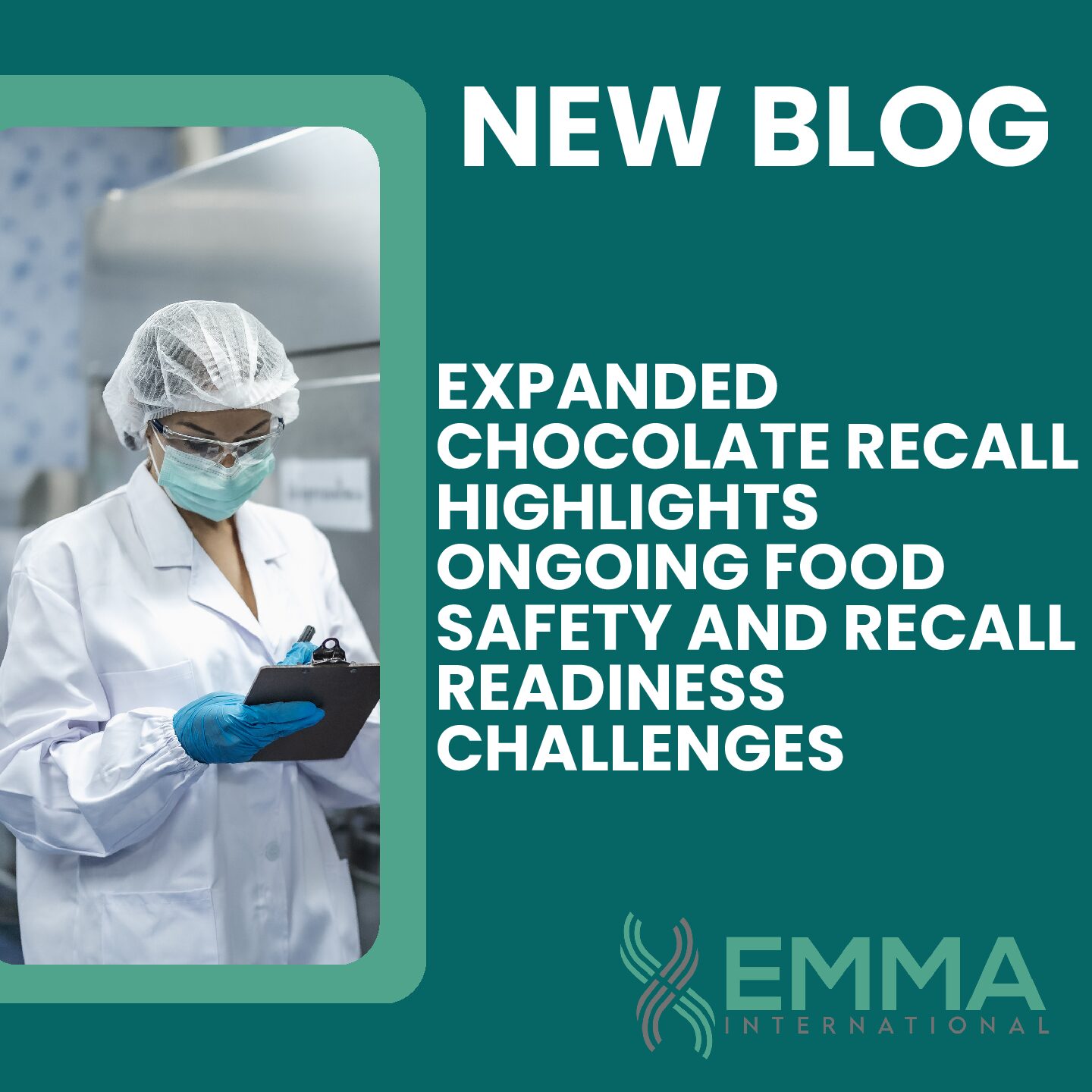
Specialty food company Spring & Mulberry expanded a previously announced voluntary recall of its chocolate products due to the potential presence of Salmonella. The update followed additional internal and third-party testing that identified contamination risk across multiple production lots manufactured on shared equipment during the same timeframe.
The recall, published by the U.S. Food and Drug Administration, underscores how quickly a localized quality concern can broaden when manufacturers take a precautionary, risk-based approach to food safety.
Why Salmonella Remains a Critical Regulatory Concern
Salmonella contamination continues to be one of the most closely monitored food safety risks in the United States. While healthy individuals may experience mild symptoms such as fever or gastrointestinal distress, vulnerable populations including young children, the elderly, and immunocompromised individuals face a higher risk of severe complications.
In this case, no illnesses had been reported at the time of the recall expansion. However, the decision to widen the scope reflects regulatory expectations that companies act swiftly when there is uncertainty around contamination, particularly when intermittent detection is possible and shared manufacturing equipment is involved.
The Role of Third-Party Testing and Preventive Controls
According to the company’s announcement, the potential contamination was identified through routine third-party testing conducted by its contract manufacturer. This highlights the importance of robust preventive controls and supplier oversight under FDA’s food safety framework, particularly for companies that rely on co-manufacturing or shared production environments.
FDA guidance emphasizes that manufacturers must not only investigate positive test results but also assess whether contamination could affect other products produced under similar conditions. Expanding a recall proactively can reduce public health risk and demonstrate regulatory responsibility, even when confirmed illnesses have not occurred.
Recall Scope, Traceability, and Consumer Communication
The recall applied to multiple chocolate flavors sold online and through select retail partners nationwide. Consumers were advised to stop consuming affected products, dispose of them, and contact the company directly for refunds or replacements.
From a regulatory standpoint, this case illustrates several critical recall management elements:
- Clear lot-level traceability and recordkeeping
- Prompt communication with regulators
- Transparent, consumer-facing instructions
- Willingness to broaden recall scope when risk cannot be ruled out
These elements are essential to maintaining compliance and public trust during food safety events.
How EMMA International Supports Recall and Quality Readiness
At EMMA International, we work with food, consumer goods, and regulated product manufacturers to strengthen quality systems, supplier oversight, and recall preparedness. Our teams support organizations with risk-based assessments, FDA-aligned recall strategies, preventive controls, and regulatory communications to help manage events efficiently while minimizing disruption.
As regulatory expectations continue to emphasize proactive risk management, organizations that invest in strong quality and compliance frameworks are better positioned to respond quickly and confidently when issues arise.
For more information on how EMMA International can assist, visit www.emmainternational.com or contact us at (248) 987-4497 or info@emmainternational.com.
Reference:
U.S. Food and Drug Administration, Recalls, Market Withdrawals, & Safety Alerts
FDA, Food Safety Modernization Act (FSMA) Preventive Controls Guidance
Centers for Disease Control and Prevention (CDC), Salmonella and Foodborne Illness Overview