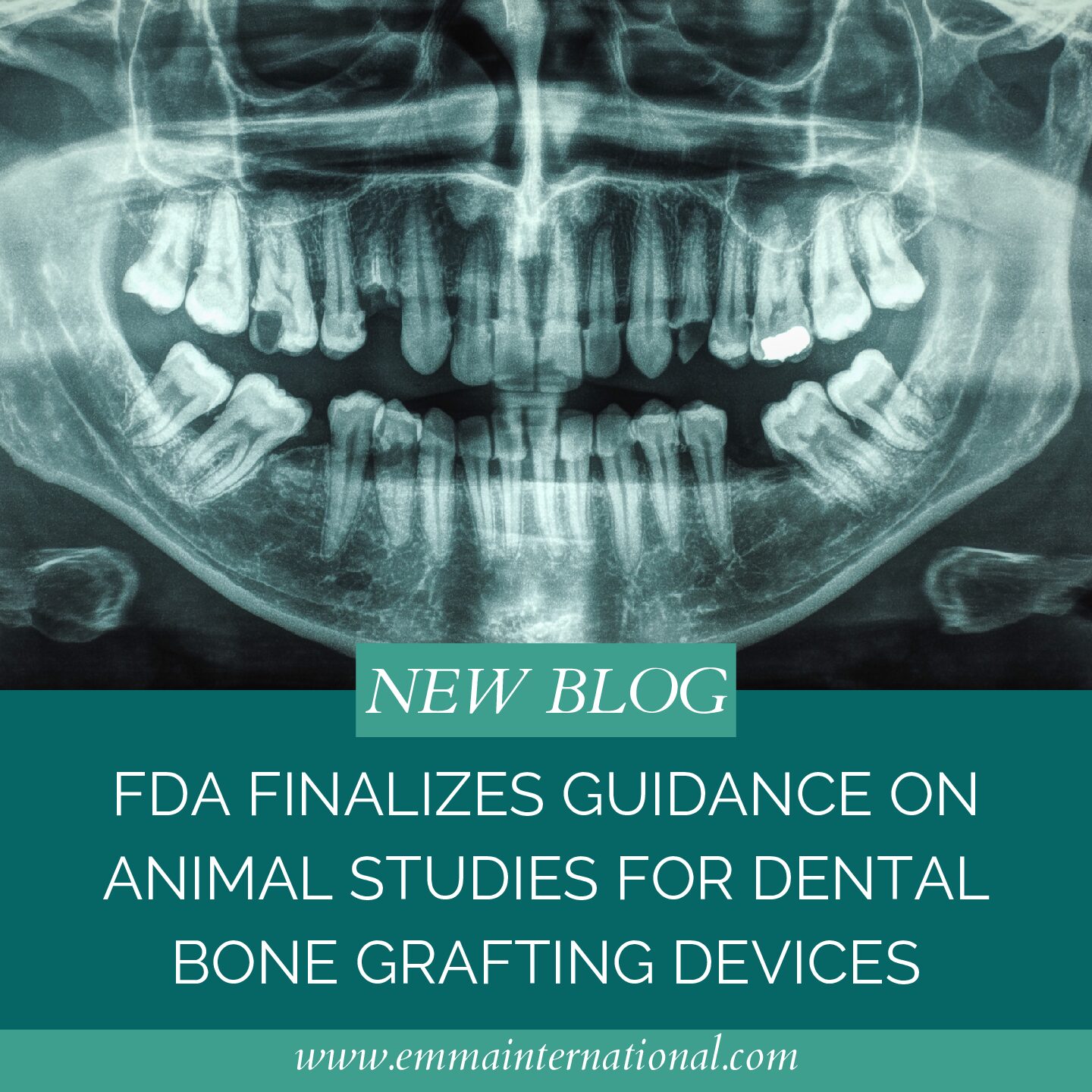
The US Food and Drug Administration (FDA) has finalized its guidance on the use of animal studies in the development of dental bone grafting devices, providing sponsors with greater clarity on how to demonstrate safety and effectiveness for regulatory submissions. While the guidance does not significantly differ from the draft released in March 2024, it underscores the agency’s continued emphasis on using appropriately designed preclinical studies to evaluate device performance in real-world clinical conditions.
The Role of Dental Bone Grafting Devices
Dental bone grafting devices are commonly used to augment, reconstruct, or fill bone defects in the jaw and facial region. They play a critical role in preparing patients for dental implants, restoring facial structure, and improving outcomes in oral surgery. Because these materials often interact directly with living tissue, FDA has historically required robust preclinical data to ensure their safety and performance.
Animal studies have traditionally been part of this data package, as they can evaluate aspects of safety and function that cannot be adequately assessed through bench testing or computer modeling. The finalized guidance confirms that animal studies remain an important component in most 510(k) submissions for these products, even when a predicate device already exists.
Key Elements of the Final Guidance
One of the central messages in the finalized guidance is that the design of animal studies must be carefully aligned with the device’s mechanism of action and intended use. FDA emphasizes that studies should be designed with clear endpoints, focusing on how well the device performs in vivo and whether it effectively mitigates identified risks.
The agency also highlights the importance of simulating real-world conditions as closely as possible. For example, study protocols should consider clinical factors such as surgical technique, instructions for use, and any auxiliary materials that might be employed during actual procedures. These considerations ensure that the data collected will reflect how the product performs once in widespread clinical use.
Encouraging Use of Alternatives to Animal Testing
Consistent with broader federal policy, FDA encourages manufacturers to embrace the “3Rs”—replacement, reduction, and refinement—when it comes to animal testing. Where possible, sponsors should use non-animal methods to collect data on product performance. If viable alternatives exist, FDA recommends that companies engage early with regulators through the Q-Submission Program to discuss their proposals. This process allows sponsors to confirm the suitability of alternative methods before investing significant resources in animal testing.
Implications for Industry
For device manufacturers, the finalized guidance provides both clarity and responsibility. While FDA is not eliminating the expectation for animal studies, it is placing emphasis on thoughtful study design and early engagement with regulators. Companies that fail to align study protocols with FDA expectations could face delays in the review process or additional requests for data.
This is particularly relevant given the competitive nature of the dental device market, where time-to-market can significantly impact a product’s commercial success. Ensuring compliance with FDA’s guidance not only supports regulatory approval but also builds confidence among clinicians and patients regarding the safety and reliability of these devices.
The Bigger Picture
FDA’s finalized guidance for dental bone grafting devices reflects a broader trend in regulatory science—balancing the need for rigorous evidence with the ethical imperative to reduce animal testing where possible. By clearly outlining expectations for study design while also promoting innovation in testing methodologies, the agency is signaling its commitment to both scientific integrity and public health.
At EMMA International, we help medical device companies interpret and implement evolving FDA requirements, including guidance like this one. Our team of regulatory and quality experts supports clients in designing compliant preclinical programs, engaging with FDA through the Q-Submission process, and preparing robust submissions that minimize regulatory delays. By aligning regulatory strategy with product development, EMMA International ensures that clients can bring safe, effective, and innovative devices to market efficiently.
For more information on how EMMA International can assist, visit www.emmainternational.com. Contact EMMA International at (248) 987-4497 or by email at info@emmainternational.com to learn more.
References
Ferdous Al-Faruque. (2025, August 25). FDA finalizes guidance on using animal studies to develop dental bone grafting devices. Regulatory Affairs Professionals Society.