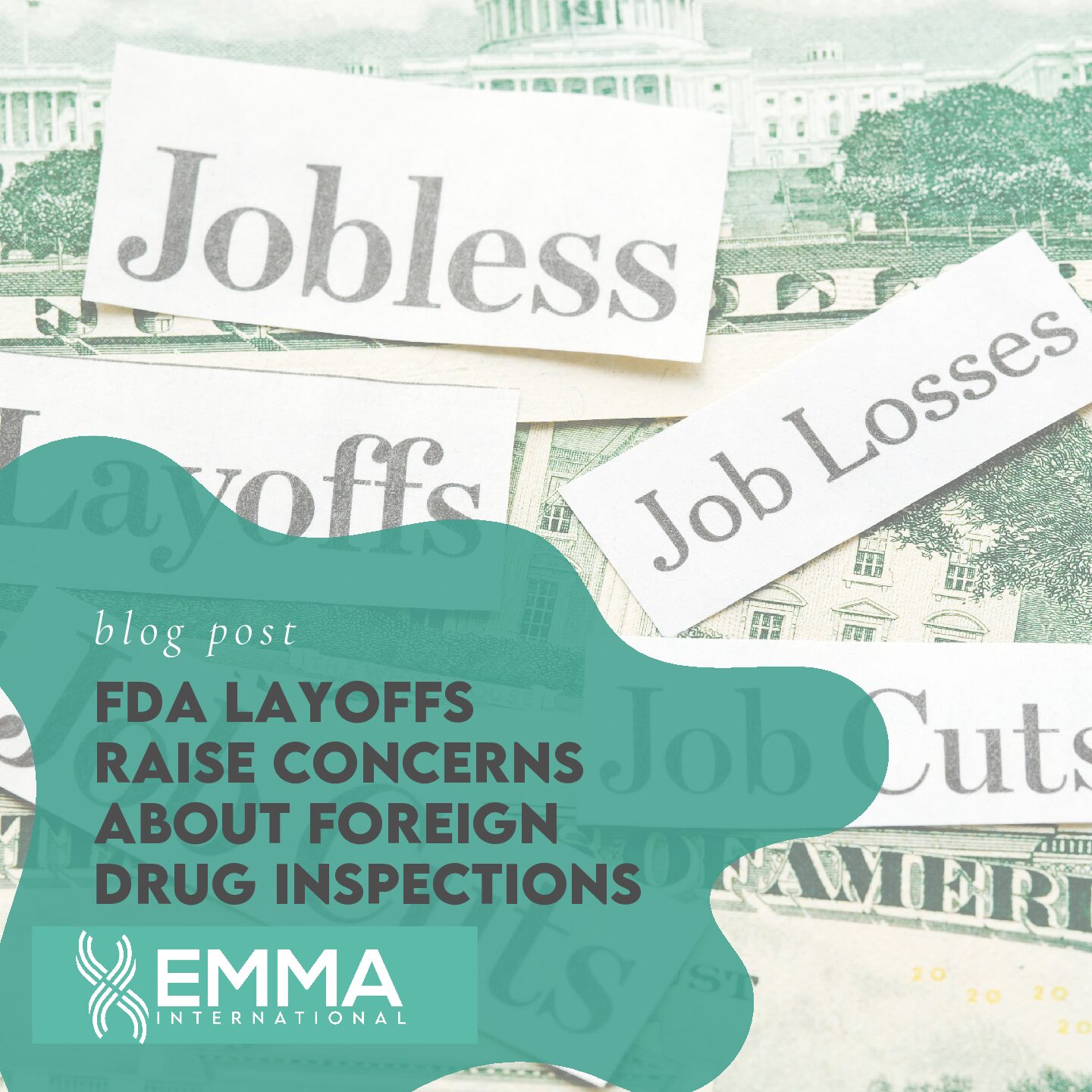
Recent layoffs at the U.S. Food and Drug Administration (FDA) have sent ripples through the pharmaceutical and regulatory communities, raising serious concerns about the agency’s ability to effectively inspect foreign drug manufacturing facilities. As the FDA scales back staffing, particularly in areas tied to global operations, industry experts and public health advocates are warning of a potential decline in oversight—just as international drug imports continue to grow.
Over the past decade, the pharmaceutical supply chain has become increasingly globalized. According to the FDA, nearly 80% of active pharmaceutical ingredients (APIs) used in the U.S. are manufactured overseas, primarily in countries like India and China. Finished dosage forms, too, are frequently produced abroad before being shipped to the U.S. for distribution. This reliance on foreign manufacturing makes consistent and thorough inspection critical to ensure drug quality, safety, and efficacy.
However, with recent reports of workforce reductions at the FDA—including in key areas like the Office of Regulatory Affairs (ORA)—there is mounting concern that the agency will be stretched too thin to maintain its rigorous inspection schedule. Foreign inspections, which already faced backlogs due to travel restrictions during the COVID-19 pandemic, may now be delayed even further or deprioritized altogether.
Historically, the FDA has struggled to keep pace with inspections of overseas facilities. Unlike domestic inspections, which are typically unannounced, foreign inspections are often scheduled in advance and occur less frequently. A reduction in FDA personnel could exacerbate these issues, limiting the agency’s ability to conduct in-depth assessments and follow up on potential compliance issues in a timely manner.
The consequences of decreased oversight are not theoretical. In the past, lapses in foreign manufacturing standards have led to major public health crises, such as contamination events, recalls, and even fatalities. Without regular FDA presence in these facilities, there is an increased risk of substandard or adulterated products entering the U.S. market.
Industry stakeholders are calling for increased transparency and accountability from the FDA in the wake of the layoffs. Some have proposed leveraging remote inspection technologies and third-party auditors, while others argue for bolstering domestic capacity to reduce reliance on foreign supply chains altogether. Regardless of the path forward, there is consensus that weakening the FDA’s global oversight function could have dire long-term consequences.
For pharmaceutical companies, this shift underscores the need for internal vigilance. Firms must ensure robust quality management systems and proactively audit their supply partners to mitigate risk. Additionally, organizations like EMMA International can step in to support companies navigating regulatory uncertainty by offering expertise in compliance strategy, remote auditing, and global quality assurance.
The FDA plays a pivotal role in safeguarding public health. As budget cuts and staffing challenges impact its ability to perform, the industry must adapt quickly, without compromising quality or compliance. Now more than ever, collaboration between regulators, manufacturers, and consultants is essential to maintaining the integrity of the pharmaceutical supply chain—regardless of where products are made.
For more information on how EMMA International can assist, visit www.emmainternational.com. Contact EMMA International at (248) 987-4497 or by email at info@emmainternational.com to learn more.