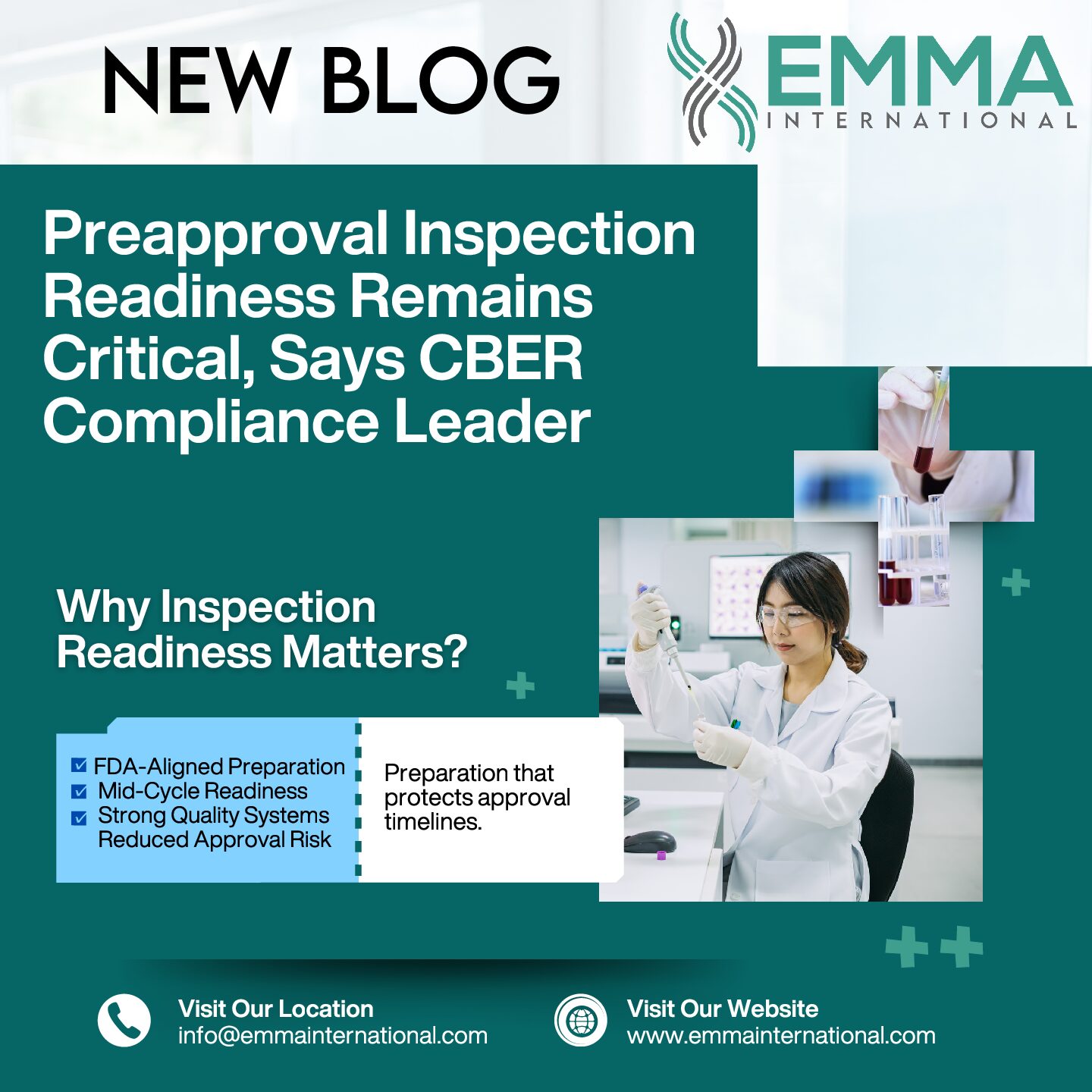
At the 2025 Food and Drug Law Institute (FDLI) Enforcement, Litigation, and Compliance Conference, senior leadership from the FDA’s Center for Biologics Evaluation and Research (CBER) emphasized that sponsors must be fully prepared for preapproval inspections (PAIs) much earlier in the review cycle than many currently plan for. Melissa Mendoza, Director of the Office of Compliance and Biologics Quality (OCBQ), warned that delaying inspection readiness can jeopardize an application and compress the time needed to resolve inspection findings.
Mid-Cycle Inspections: A Must, Not a Preference
Mendoza noted that when sponsors check the “inspection readiness” box on Form 356h, FDA expects the facility to truly be inspection-ready. Increasingly, however, reviewers encounter situations where sponsors request that inspections occur closer to the PDUFA date—sometimes as little as a month before the decision.
Such late-cycle scheduling, Mendoza said, disadvantages sponsors by limiting time to respond to observations and strains FDA’s ability to complete reviews efficiently. Conducting PAIs no later than the mid-cycle point allows sponsors and inspectors sufficient time to resolve issues well before the decision date.
This challenge is even more acute for supplemental applications, where late readiness can complicate and delay review.
Key Recommendations for Sponsors
Mendoza highlighted several practices that support smoother inspections and fewer compliance issues:
Engage Early and Often
Sponsors should use available meetings with the review team to clarify expectations, inspection timing, and any unique product considerations.
Strengthen the Quality Unit
A capable, empowered quality unit remains essential for inspection readiness and for managing observations efficiently and accurately.
Evaluate Foreign Inspection Findings
CBER may review inspection reports from foreign authorities when mutual recognition agreements apply. Although legal authorities differ, foreign agencies often identify the same issues an FDA investigator would.
Avoid Disputing Observed Reality
Mendoza stressed that disputing clearly observed deficiencies escalates tension and rarely benefits the sponsor. A factual, solution-oriented approach is far more effective.
Do Not Rush to Market
Sponsors should ensure their facility, processes, and staff are prepared before submitting—regardless of commercial pressures.
Contract Manufacturers: Choose Carefully and Communicate Constantly
According to Mendoza, many sponsors underestimate the readiness of their contract manufacturing organizations (CMOs). Warning signs include:
- Operators still in training
- Weak understanding of process controls
- Rising deviations tied to operator error
Strong communication between sponsors and CMOs is essential to ensure product quality and prevent avoidable inspection delays.
Current CBER Enforcement Priorities
Mendoza also outlined several areas of focus for CBER’s compliance and enforcement teams in FY 2025:
- Unapproved HIV tests and collection kits
- False or misleading advertising claims
- Unapproved regenerative medicine products, especially those derived from placental, amniotic, umbilical cord, or adipose tissues
This year, CBER issued 25 warning letters, with approximately 60% directed at companies marketing unapproved regenerative medicine products.
Regulatory Authority Upheld in Stem Cell Litigation
Mendoza closed with an update on the long-running United States v. California Stem Cell Treatment Center case. In October 2025, the U.S. Supreme Court declined to hear an appeal challenging FDA’s authority to regulate certain stem cell procedures as drugs under the FDCA. The decision leaves in place a 2024 Ninth Circuit ruling affirming FDA’s oversight authority.
For more information on how EMMA International can assist, visit www.emmainternational.com or contact us at (248) 987-4497 or info@emmainternational.com.
Reference:
Eglovitch, J. (2025, December 10). CBER official stresses importance of preapproval inspection readiness. Regulatory Focus. Regulatory Affairs Professionals Society.
U.S. Food and Drug Administration. (2025). Center for Biologics Evaluation and Research (CBER) compliance and enforcement updates [Public statements and materials].
Food and Drug Law Institute. (2025). 2025 Enforcement, Litigation, and Compliance Conference Proceedings.