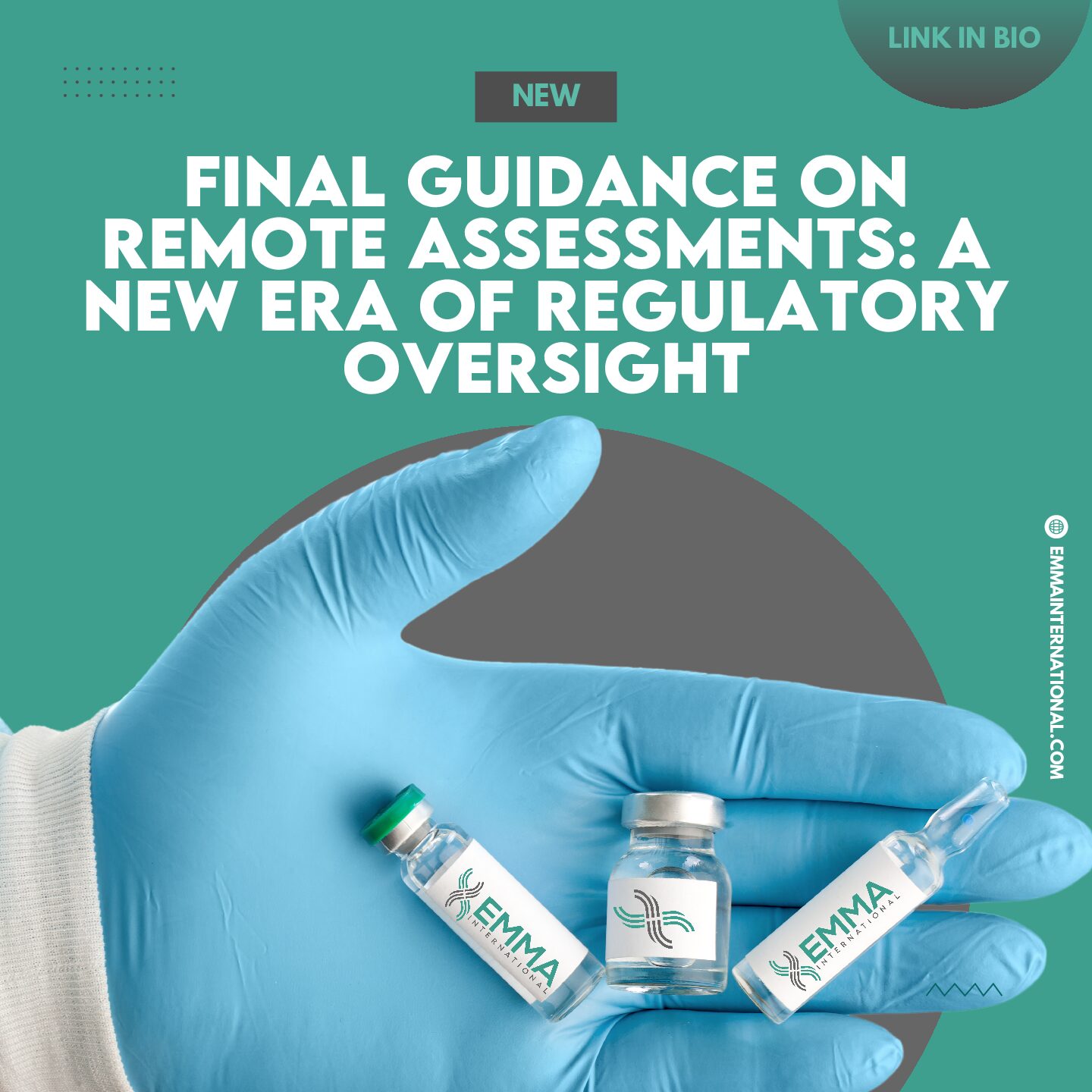
The U.S. Food and Drug Administration (FDA) has officially issued its final guidance on remote regulatory assessments (RRAs), cementing a practice that has gained momentum since the COVID-19 pandemic. This milestone signals a permanent shift in how the FDA oversees compliance within the pharmaceutical, biologics, and medical device industries. As life sciences companies adjust to this updated landscape, understanding the implications of this final guidance is critical for maintaining regulatory compliance and operational readiness.
What Are Remote Regulatory Assessments?
Remote regulatory assessments are evaluations conducted by the FDA without an in-person presence at the facility. These may include requests for records and other information under section 704(a)(4) of the Federal Food, Drug, and Cosmetic Act, virtual meetings, video interactions, and livestream facility walkthroughs. Unlike formal inspections, RRAs are not legally required but are expected to be treated with the same level of seriousness and responsiveness by manufacturers.
The newly finalized guidance outlines how and when the FDA may use RRAs. It clarifies that these assessments may be initiated for both domestic and foreign establishments and can be used in pre-approval, surveillance, or follow-up contexts. Notably, RRAs may also be used to support application reviews and evaluate compliance with CGMPs, even in situations where the agency cannot conduct an in-person inspection.
Why This Matters
The finalization of this guidance reflects the FDA’s commitment to modernizing its oversight tools without compromising product quality or patient safety. For regulated industries, this shift brings both opportunities and challenges:
- Greater flexibility: Remote assessments may reduce the burden of hosting onsite inspections and allow companies to better coordinate their responses to FDA queries.
- Increased scrutiny: While not inspections per se, RRAs still carry weight. Documentation must be complete, organized, and ready to be shared digitally at a moment’s notice.
- Global alignment: With the FDA’s increasing collaboration with international regulatory bodies, remote assessments offer a way to streamline oversight and reduce delays in global supply chains.
Best Practices for Preparation
To prepare for the possibility of an RRA, companies should treat it with the same rigor as an on-site inspection. Consider the following strategies:
- Digitize documentation: Ensure all quality, manufacturing, and regulatory records are stored in a secure, easily accessible digital format.
- Conduct mock remote assessments: Simulate an RRA to identify gaps in communication, document access, and digital infrastructure.
- Train teams for virtual readiness: Staff should be comfortable using video conferencing tools and understand protocols for presenting data remotely.
- Stay current with FDA expectations: Monitor updates to guidance documents and incorporate feedback from past assessments.
How EMMA International Can Help
At EMMA International, we understand the evolving regulatory environment and the importance of proactive compliance. Our team of quality and regulatory experts can help your organization implement systems that are audit-ready—whether for an onsite inspection or a remote assessment. From digital document management to virtual mock assessments, we provide turnkey solutions tailored to your specific operational needs.
The FDA’s final guidance on RRAs marks a clear turning point in regulatory oversight. By embracing this new standard, life sciences companies can not only maintain compliance but also build more agile, inspection-ready operations for the future.
For more information on how EMMA International can assist, visit www.emmainternational.com. Contact EMMA International at (248) 987-4497 or by email at info@emmainternational.com to learn more.