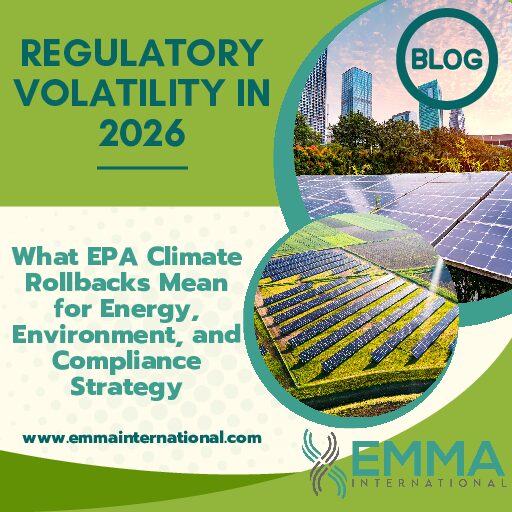
In early 2026, the U.S. Environmental Protection Agency (EPA) finalized one of the most consequential changes in federal environmental regulation in decades — repealing the 2009 greenhouse gas (GHG) endangerment finding that served as the legal foundation for major climate standards under the Clean Air Act. This repeal, framed as a landmark deregulatory action, impacts an array of federal emissions rules and broader climate policy oversight.
At the same time, the EPA also rolled back tightened emissions limits for coal-fired power plants, including standards for mercury and other toxic pollutants, in a bid to prioritize energy supply and cost concerns.
These developments represent a pivotal shift in environmental regulatory expectations — not just in the U.S., but across global markets. Companies operating across regulated sectors, from energy and manufacturing to aerospace, automotive, technology, and beyond, now face heightened uncertainty in how environmental compliance and sustainability obligations will evolve.
A Fragmented Compliance Landscape
The EPA’s repeal introduces regulatory ambiguity across multiple fronts. Many corporate governance and risk teams had been aligning emissions strategies, environmental disclosure practices, and long-term decarbonization planning with the assumption that the endangerment finding would remain a stable legal basis for greenhouse gas regulation. Its removal disrupts that assumption, potentially reshaping the enforcement climate for emissions standards and environmental risk reporting.
This change contrasts with continuing regulatory advances in other jurisdictions, such as the European Union’s evolving carbon pricing and border adjustment mechanisms under the EU Emissions Trading System (ETS) and and Carbon Border Adjustment Mechanism (CBAM) that are slated to affect trade and supply chain carbon costs.
Meanwhile, ESG regulatory frameworks globally — while recalibrating in 2026 — continue to drive expectations for climate-related disclosure, standardized reporting, and risk governance across industries. Even where formal mandates are weakened, investment trends and stakeholder expectations maintain pressure on companies to transparently manage environmental impacts.
From Compliance to Strategic Integration
Sudden deregulation does not eliminate environmental compliance risk — it merely shifts the regulatory boundaries. Organizations must now navigate a more unpredictable landscape that includes:
- Jurisdictional complexity and divergence: Where federal rules soften, state and regional authorities (e.g., California and other states) are pursuing their own climate and clean energy enforcement actions.
- Cross-border regulatory tension: Differences in emissions pricing, reporting and sustainability requirements can create competitive mismatches or compliance gaps.
- Stakeholder and investor pressure: Even absent strict federal mandates, investors and customers still demand credible environmental governance, making ESG reporting and traceability strategically material.
In this environment, compliance cannot simply be reactive or narrowly defined. Without forward-looking strategy, organizations risk operational disruption, enforcement actions, supply chain complications, and reputational damage.
How EMMA International Supports Environmental Compliance Strategy
At EMMA International, we help organizations build resilient regulatory and operational frameworks that adapt to shifting energy and environmental expectations — whether those emerge from federal rule changes, international policy divergence, or stakeholder-driven sustainability frameworks.
Our support includes:
- Environmental regulatory strategy and risk assessment
- Cross-jurisdiction compliance alignment
- Sustainability reporting and disclosure readiness
- Integrated energy and environmental governance frameworks
These capabilities enable organizations to convert regulatory change into strategic clarity — aligning regulatory compliance with broader business objectives even amid market volatility.
In a year defined by regulatory realignment, entities that treat environmental compliance as a static checklist will fall behind. Those that integrate regulatory foresight, governance, and operational resilience will lead.
For more information on how EMMA International can assist, visit www.emmainternational.com or contact us at (248) 987-4497 or info@emmainternational.com.