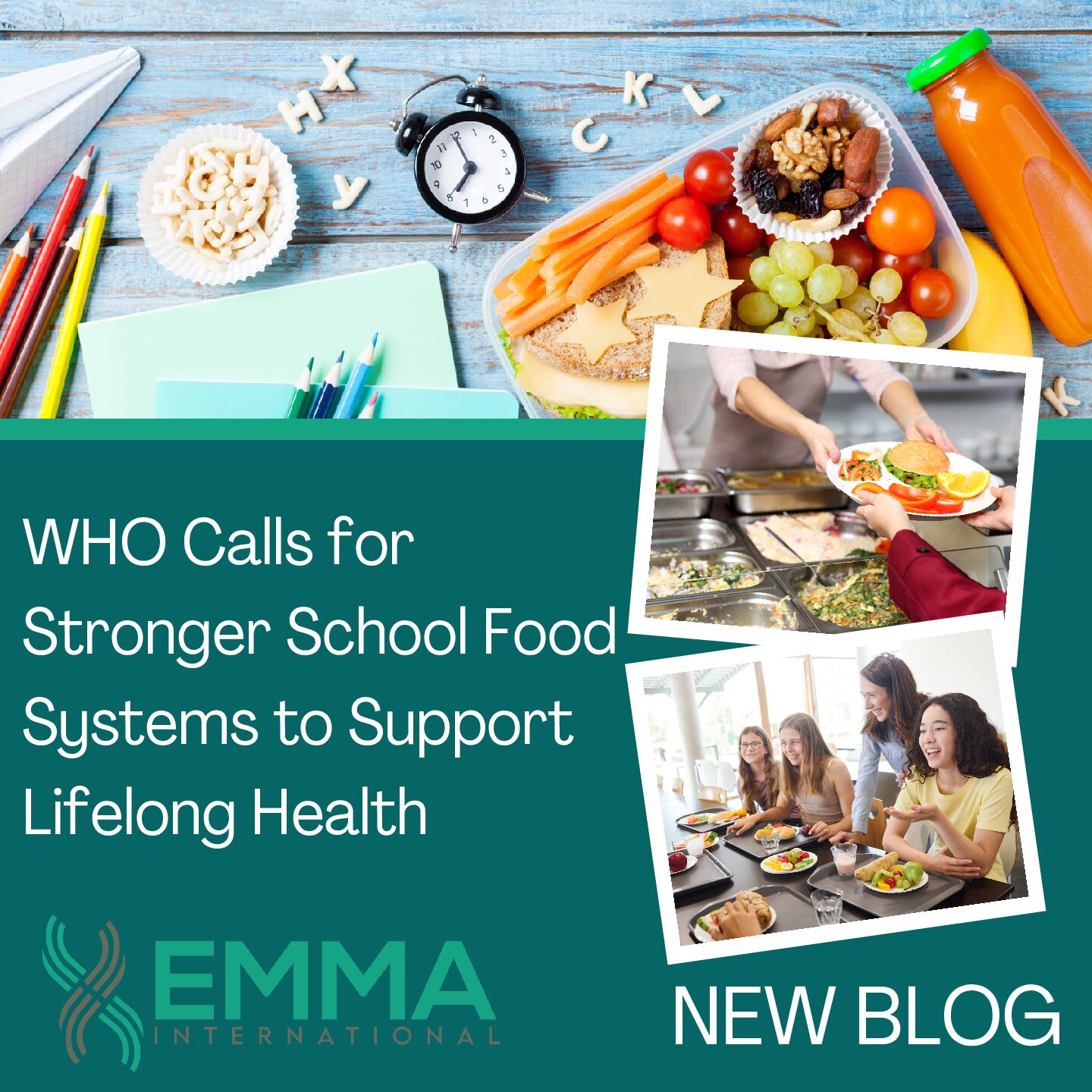
The World Health Organization (WHO) has issued new global guidance urging countries to strengthen school food environments as part of a broader effort to address rising childhood obesity while continuing to combat undernutrition. The guidance emphasizes that improving what children eat at school is not simply a nutrition issue, but a systems challenge that sits at the intersection of public health, education policy, and long-term disease prevention.
For the first time, WHO is recommending a comprehensive, whole-school approach to food environments. This includes not only the meals provided through school feeding programs, but also the foods and beverages available across the broader school setting. The goal is to ensure that healthy, nutritious options are the default choice throughout a child’s school day.
Schools at the center of a growing global challenge
Childhood malnutrition is increasingly defined by a dual burden. While undernutrition remains a serious concern in many regions, rates of childhood overweight and obesity are rising worldwide. Recent global estimates indicate that obesity now affects more school-aged children than underweight conditions, marking a significant shift in global nutrition trends.
Schools play a unique role in shaping dietary behaviors. Children spend a large portion of their day in educational settings, and repeated exposure to certain foods, pricing structures, and marketing practices can influence eating habits well into adulthood. As a result, school food environments represent a critical leverage point for long-term public health outcomes.
Moving from policy to practice
WHO’s guidance highlights that many countries already have policies addressing school food and nutrition. However, the effectiveness of these policies varies widely. While national standards for school meals are common, fewer countries have implemented mechanisms to restrict the marketing of foods high in sugar, salt, or unhealthy fats within or around schools.
The guidance recommends two core approaches. First, schools should adopt clear standards that increase access to healthy foods while limiting less nutritious options. Second, behavioral “nudging” strategies can be used to influence food choices, such as changing product placement, presentation, or pricing to encourage healthier selections. Importantly, WHO emphasizes that policies alone are insufficient without monitoring, enforcement, and accountability mechanisms.
Implementation requires system-level coordination
The new guidance reflects a broader recognition that improving nutrition outcomes requires more than isolated interventions. Effective school food systems depend on coordination across education authorities, public health agencies, suppliers, and local governments. Data collection, performance monitoring, and sustainable financing models are essential to ensure that standards translate into consistent practice.
WHO also notes that local and subnational authorities play a critical role in implementation. Cities and regional governments often have direct responsibility for school operations and food procurement, making them central actors in translating national guidance into real-world impact.
Broader implications for system design and governance
While the guidance focuses on schools, the underlying message extends beyond education systems. Health outcomes are increasingly shaped by how complex systems are designed, governed, and executed over time. Nutrition policy, like many public health and regulatory initiatives, succeeds or fails based on delivery capacity, data integrity, and cross-sector collaboration.
At EMMA International, we work with organizations navigating similar challenges across public health, infrastructure, and regulated environments. Our approach focuses on strengthening governance models, aligning policy with operational reality, and building systems that can sustain impact over the long term. As global institutions place greater emphasis on prevention and resilience, the ability to move from guidance to execution will remain a defining factor in success.
For more information on how EMMA International can assist, visit www.emmainternational.com or contact us at (248) 987-4497 or info@emmainternational.com.
Reference:
World Health Organization (WHO), Guideline on Evidence-Based Policies to Create Healthy School Food Environments (2026).
WHO Global Database on the Implementation of Food and Nutrition Action (GIFNA), School Food and Nutrition Policies Overview.
WHO Acceleration Plan to Stop Obesity, Global Strategy and Implementation Framework.