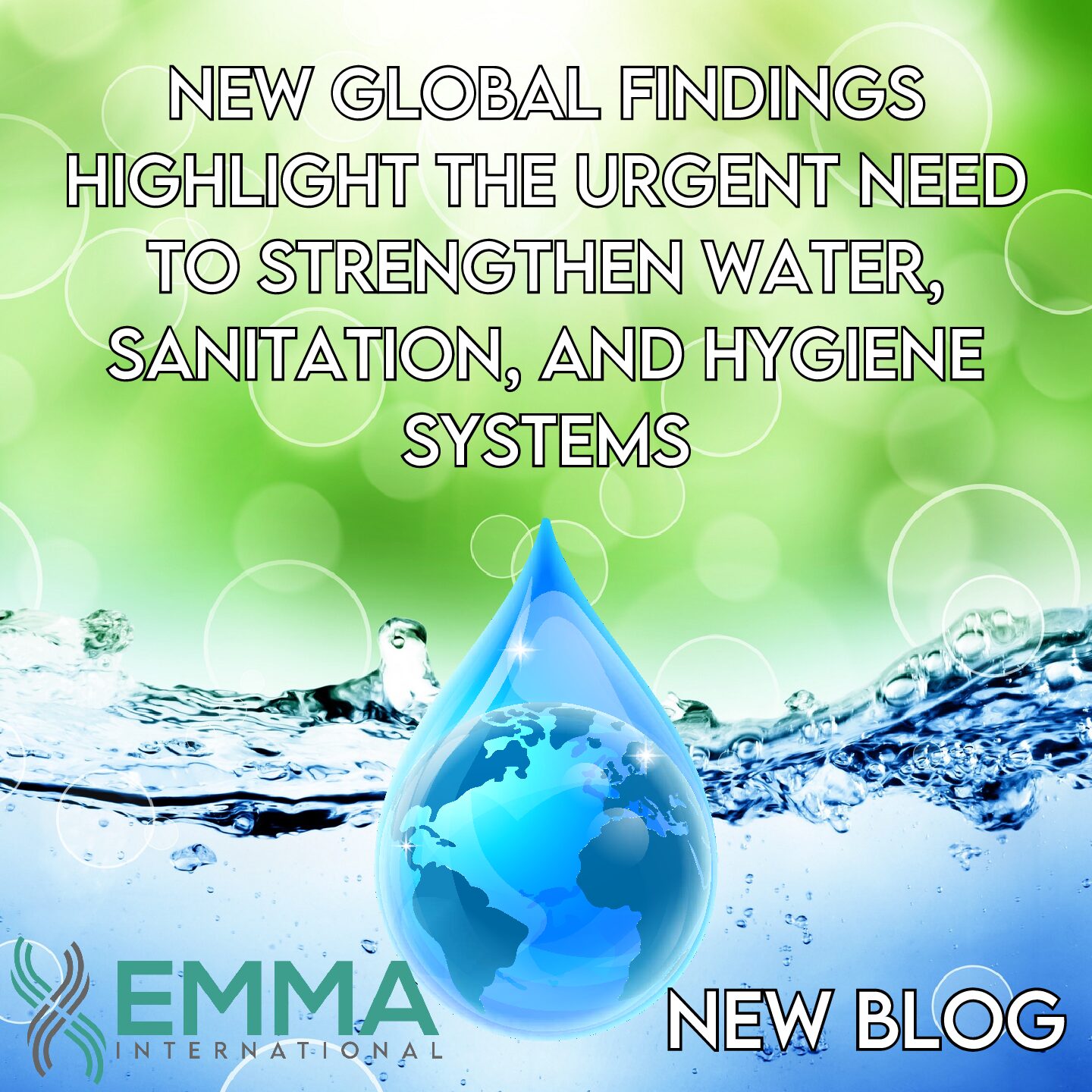
Recent findings from the UN-Water Global Analysis and Assessment of Sanitation and Drinking-Water (GLAAS) underscore a growing global challenge: access to safe drinking water, sanitation, and hygiene is not being limited by a lack of goals, but by weaknesses in system execution. As climate pressures intensify and disease outbreaks remain persistent, the ability of countries to deliver reliable WASH services has become a critical public health and infrastructure issue.
The GLAAS Global Update 2025 draws on data from more than 100 countries and territories, representing over half of the world’s population. The analysis reveals a consistent pattern across regions. While national policies and targets for water and sanitation are often in place, many countries lack the operational capacity, financing structures, and governance clarity needed to translate plans into measurable outcomes.
Delivery capacity remains the primary constraint
One of the clearest signals from the report is that implementation, not policy ambition, is holding progress back. Only a small fraction of countries report having sufficient financial and human resources to execute their WASH plans. In many cases, responsibilities are spread across multiple government institutions with overlapping mandates, creating inefficiencies and gaps in accountability.
Hand hygiene presents a particularly stark example. Although most countries have targets for drinking water and sanitation, fewer than half report having a national hand hygiene target, despite its central role in disease prevention and outbreak control.
These capacity gaps have tangible consequences. Billions of people globally still lack safely managed drinking water, sanitation, or basic hygiene services, leaving populations vulnerable to preventable health risks.
Financing, oversight, and system efficiency challenges
The GLAAS findings also point to structural weaknesses in how WASH systems are financed and regulated. Participating countries reported substantial funding gaps between identified needs and available resources, with efficiency losses further eroding system performance. High levels of non-revenue water reflect aging infrastructure, poor monitoring, and weak operational controls.
Regulatory oversight remains inconsistent. Fewer than half of countries publish public reports on drinking-water quality, and routine surveillance often falls short of recommended frequency. While water safety planning is commonly referenced in policies, implementation at scale remains uneven, limiting its effectiveness as a preventive control.
Climate resilience is rising, but equity gaps remain
Encouragingly, many countries are beginning to integrate climate risk into WASH planning. The majority now acknowledge climate impacts within national policies and strategies. However, targeted measures to support populations most affected by climate change remain limited. Financing mechanisms and monitoring frameworks to track progress for vulnerable groups are often underdeveloped, creating a disconnect between policy intent and real-world resilience.
Public health implications cannot be ignored
Weak WASH systems carry severe health consequences. Preventable deaths linked to unsafe water and poor sanitation remain significant, and recent years have seen recurring outbreaks of waterborne diseases across multiple regions. These outcomes reinforce the need to treat WASH not as a standalone sector, but as a core component of public health, infrastructure resilience, and risk management.
What this means for system leaders and advisors
The GLAAS findings highlight a broader lesson that extends beyond water and sanitation. Complex systems fail not because of missing policies, but because of gaps in governance, data, financing, and execution. Strengthening delivery requires coordinated oversight, clear accountability, reliable data flows, and risk-based planning across the full lifecycle of services.
At EMMA International, we support organizations and public-sector stakeholders facing similar system-level challenges across regulated and high-impact environments. Whether in health systems, infrastructure, environmental programs, or emerging technology sectors, our work focuses on translating policy into execution through stronger governance models, operational readiness, and sustainable system design.
As global attention turns toward the 2026 UN Water Conference, the message from GLAAS is clear: progress will depend not on new commitments alone, but on the ability to build systems that can reliably deliver, adapt, and endure.
For more information on how EMMA International can assist, visit www.emmainternational.com or contact us at (248) 987-4497 or info@emmainternational.com.
Reference:
UN-Water, State of Systems for Drinking-Water, Sanitation and Hygiene: Global Update 2025 (GLAAS)
Developed jointly by the World Health Organization (WHO) and UNICEF, providing global analysis on WASH system performance, governance, and financing.
World Health Organization (WHO), Water, Sanitation and Hygiene (WASH) and Health
Overview of the public health impacts of inadequate WASH systems and links to disease prevention and health system resilience.
WHO/UNICEF Joint Monitoring Programme (JMP), Progress on Drinking Water, Sanitation and Hygiene
Global estimates on access to safely managed water, sanitation, and hygiene services used to track progress toward SDG 6.