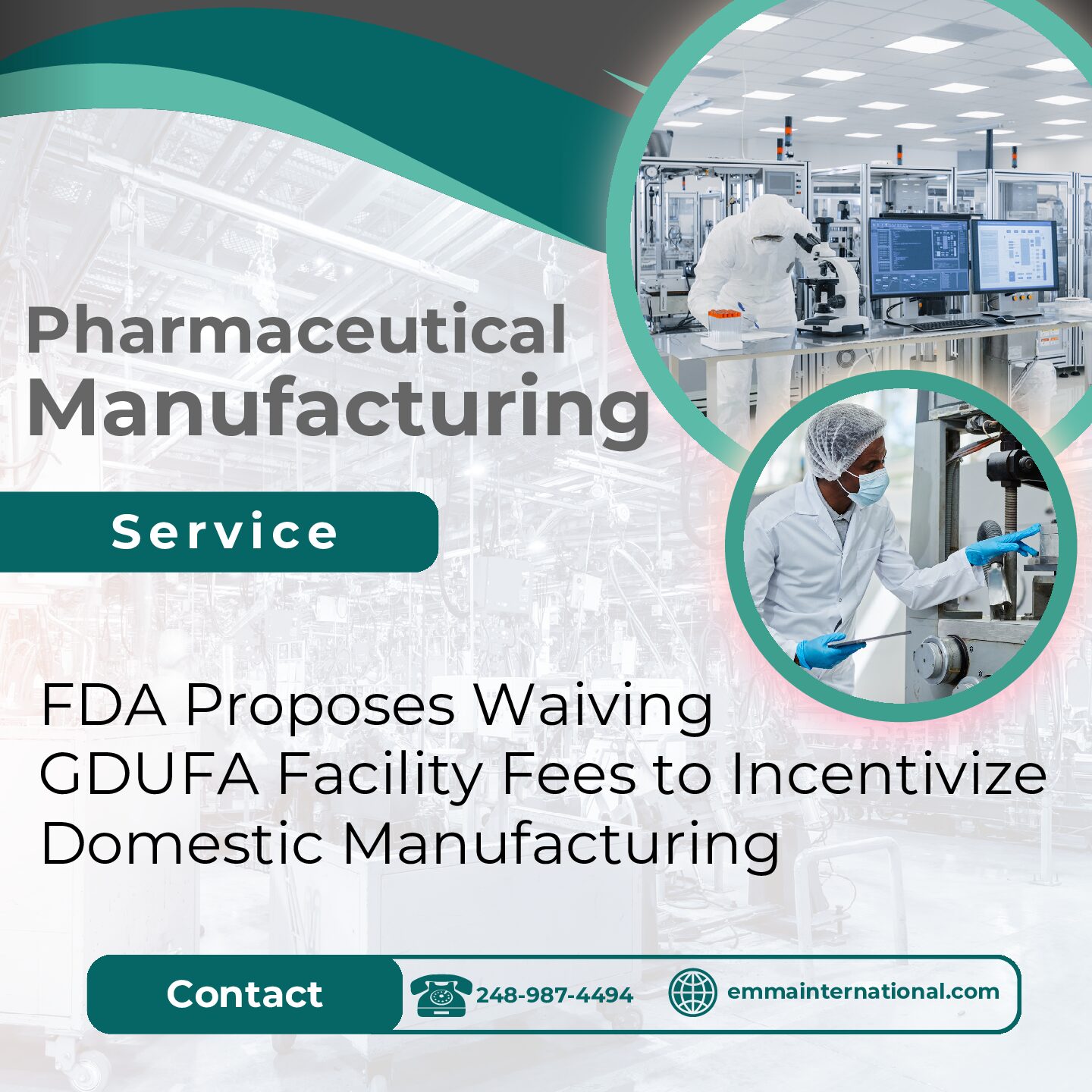
The U.S. Food and Drug Administration (FDA) has proposed a series of changes to the Generic Drug User Fee Amendments (GDUFA) framework that could significantly reshape incentives for domestic pharmaceutical manufacturing. Among the proposals is a plan to waive annual facility fees for the first three years for companies that establish new U.S.-based manufacturing operations for finished generic drugs or active pharmaceutical ingredients (APIs).
The proposal emerged during negotiations for GDUFA IV, which will govern the user fee program for fiscal years 2028 through 2032, and reflects broader federal efforts to strengthen domestic supply chains for essential medicines.
Reducing Reliance on Foreign Manufacturing
FDA stated that the proposed fee waiver is intended to address long-standing concerns about the nation’s dependence on foreign drug manufacturing. According to the agency, overreliance on overseas facilities can create vulnerabilities in patient access, drug quality oversight, and national security, particularly for critical generic medicines.
By temporarily removing facility fees for new domestic manufacturers, FDA aims to lower the upfront financial barrier associated with establishing U.S.-based production capacity. The agency framed this as one of several policy levers designed to encourage onshoring of pharmaceutical manufacturing.
Industry Pushback Highlights Practical Constraints
While aligned with federal onshoring objectives, the proposal has faced resistance from industry stakeholders. Several companies and trade groups argued that waiving fees for new entrants could disadvantage existing U.S. manufacturers that have already made substantial investments in domestic infrastructure.
Industry representatives also emphasized practical limitations, noting that constructing new manufacturing facilities can take several years. In contrast, expanding capacity at existing plants or retrofitting idle facilities could deliver faster gains in domestic production. No consensus was reached between FDA and industry on the most effective approach.
Proposed Increases to Foreign Facility Fees
In parallel, FDA proposed increasing the annual foreign facility fee from $15,000 to $25,000, with future adjustments tied to inflation. The agency stated that the increase would support more frequent unannounced inspections of overseas facilities manufacturing human generic drugs.
FDA noted that foreign facility fees have remained unchanged since GDUFA’s inception in fiscal year 2013. Industry groups, however, raised concerns that higher fees could prompt some manufacturers to exit the U.S. generic drug market, potentially exacerbating drug shortages rather than alleviating them.
Additional Incentives Through ANDA Prioritization
FDA also outlined plans to update its internal prioritization policies to favor certain U.S.-based activities. Under the proposal, priority review could be extended to manufacturers that conduct pivotal bioequivalence testing in the U.S., qualify for bioequivalence waivers, or manufacture finished dosage forms domestically.
While industry generally agreed that these measures could encourage domestic testing and production, questions remain about how FDA would apply prioritization when companies meet only some of the eligibility criteria.
Data Integrity and ANDA Review Timelines
A fourth proposal would allow FDA to extend ANDA review timelines by 180 days when data integrity or data fidelity issues are identified at a manufacturing facility. If unresolved after the extension, FDA would issue a second notification and consider the review goal date met.
Industry stakeholders supported the concept but questioned whether extending timelines alone would meaningfully address the root causes of data integrity challenges.
What This Means for Generic Drug Manufacturers
Taken together, FDA’s proposals signal a strategic shift toward using regulatory and fee-based incentives to influence where and how generic drugs are manufactured and tested. For manufacturers, these changes could affect long-term decisions around facility location, capital investment, inspection readiness, and data governance.
As GDUFA IV negotiations continue, companies will need to closely monitor how these proposals evolve and assess their potential impact on operational planning and compliance strategies.
How EMMA International Supports Domestic Manufacturing Strategy
EMMA International works with pharmaceutical and life sciences organizations to evaluate regulatory policy shifts, strengthen compliance frameworks, and support manufacturing and quality system strategy across global and domestic operations. As FDA continues to explore incentives tied to manufacturing location, EMMA helps clients align regulatory expectations, inspection readiness, and operational execution to support resilient and compliant supply chains.
For more information on how EMMA International can assist, visit www.emmainternational.com or contact us at (248) 987-4497 or info@emmainternational.com.
Reference:
U.S. Food and Drug Administration. GDUFA IV Negotiation Meeting Minutes. January 7, 2026.
FDA Center for Drug Evaluation and Research (CDER). Generic Drug User Fee Amendments Program Overview.
U.S. Executive Office of the President. Executive Order 14293 on Strengthening Domestic Manufacturing of Essential Medicines.