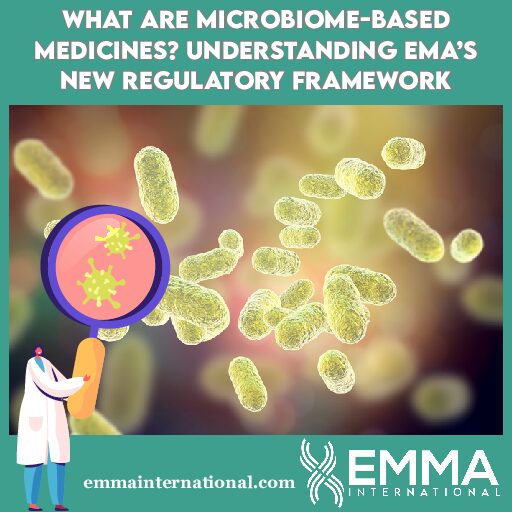
Interest in microbiome-based therapies continues to accelerate across global life sciences markets. As scientific understanding of the human microbiome expands, developers are increasingly exploring microbiome-based medicinal products (MMPs) as potential treatments for a wide range of diseases.
Recognizing this growing innovation pipeline, the European Medicines Agency (EMA) has released a concept paper proposing the development of a reflection paper that would address regulatory considerations for the non-clinical development of microbiome-based medicinal products.
The initiative signals an important step toward establishing greater regulatory clarity for this emerging therapeutic category.
The Unique Challenges of Microbiome-Based Therapies
Unlike traditional pharmaceutical products, microbiome-based medicinal products present distinct scientific and regulatory challenges. These therapies may involve live microorganisms, complex microbial ecosystems, or non-living components derived from microbiome sources.
Because of this diversity, conventional pharmacological and toxicological development approaches do not always apply. Standard non-clinical models used to evaluate safety, biodistribution, and efficacy may not accurately reflect how microbiome-based therapies interact within the human body.
The EMA noted that existing development frameworks often struggle to account for variables such as microbial persistence, interactions with host microbiota, and the potential for microbial translocation or shedding. These complexities can introduce uncertainty into development programs and regulatory submissions.
Without tailored regulatory guidance, developers may face inconsistencies in evaluation approaches, which could delay clinical development and regulatory approval.
Toward a Harmonized Regulatory Approach
The proposed reflection paper aims to provide a more structured framework for the evaluation of microbiome-based medicinal products across the European Union. The agency intends to address several core areas that are currently creating uncertainty for developers.
One major area of focus will be the diversity of microbiome products themselves. MMPs may range from fixed formulations of microbial strains to individualized or ecosystem-based therapeutic approaches targeting different microbiomes throughout the body.
Another challenge involves pharmacological modeling. Standard animal models may not be suitable for evaluating microbiome therapies due to species-specific microbiome differences. As a result, the EMA is exploring the use of alternative models and New Approach Methodologies (NAMs) that may better reflect human biological responses.
Safety considerations will also be a central focus of the reflection paper. Developers must carefully evaluate issues such as microbial persistence, biodistribution within the body, degradation pathways, and the potential for unintended microbial transmission.
Defining the Scope of Microbiome Products
The EMA concept paper identifies several categories of microbiome-based medicinal products expected to fall within the scope of the future guidance. These include live biotherapeutic products, complex microbiome ecosystem-based therapies, and non-living microbiome-derived treatments.
At the same time, the agency clarified that certain product categories will fall outside the scope of the reflection paper. These include microbiota transplantation procedures, products containing genetically modified microorganisms, microorganism-based vaccines, and therapies focused on bacteriophages or virome-based approaches.
By defining these boundaries early, regulators aim to ensure that the guidance remains focused on the unique regulatory questions associated with microbiome-derived medicines.
Supporting Innovation Through Regulatory Strategy
As emerging therapeutic modalities continue to evolve, regulatory frameworks must adapt alongside scientific innovation. For developers working in advanced biological therapies, early engagement with regulatory authorities and proactive planning for non-clinical development strategies will be increasingly important.
At EMMA International, we work with organizations across regulated industries to navigate complex and evolving regulatory landscapes. From emerging therapeutic platforms to advanced biologics and novel treatment modalities, structured regulatory strategy and quality oversight help organizations reduce uncertainty, strengthen submissions, and accelerate development timelines.
As microbiome science advances, regulatory clarity will play a critical role in translating promising research into safe and effective therapies.
For more information on how EMMA International can assist, visit www.emmainternational.com or contact us at (248) 987-4497 or info@emmainternational.com.
Reference:
European Medicines Agency. (2026, March 2). Concept paper on the development of a reflection paper for the non-clinical development of microbiome-based medicinal products.
European Medicines Agency. (2026). Regulatory considerations for microbiome-based medicinal products.
Regulatory Affairs Professionals Society. (2026). EMA proposes new microbiome reflection paper amid growing interest.