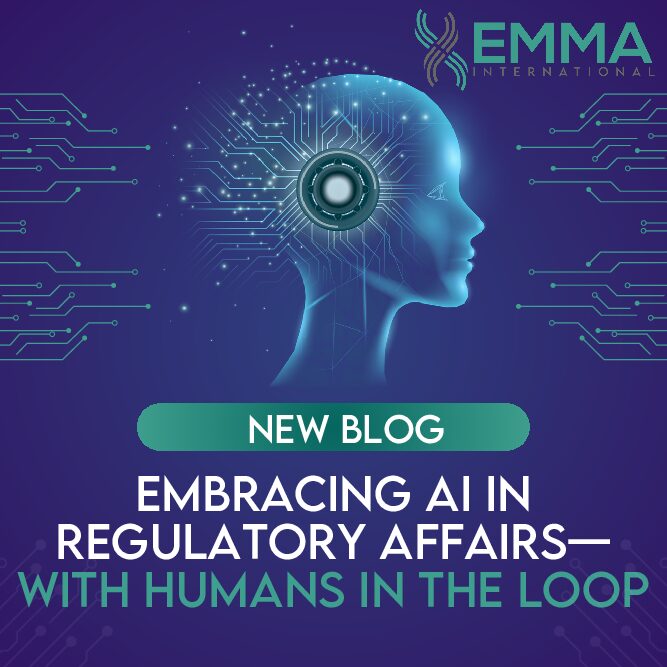
As artificial intelligence (AI) reshapes nearly every sector, regulatory professionals are beginning to confront a crucial question: how can they embrace its benefits without compromising accuracy, integrity, or accountability? At the 2025 European Digital Technology and Software Conference in Rotterdam, experts emphasized that AI adoption in regulatory work is no longer optional—but human oversight remains essential.
A Call to Action
Maarten ter Mors, CTO of CREATE Regulatory Consultancy, opened with a clear directive: the era of hesitation is over. “Do not sit on the fence and wonder what to do… AI is here and it’s here to stay,” he urged. Society is adopting AI three to four times faster than prior technologies like email or smartphones, he noted, and the most meaningful innovations will likely come from professionals on the ground—not executives in boardrooms.
For regulatory teams, this shift signals an opportunity to experiment and identify use cases that genuinely add value. Rather than waiting for formal corporate mandates, ter Mors advised empowering quality, compliance, and technical staff to explore where AI can simplify tasks such as documentation, data verification, or early-stage regulatory analysis.
The Human Safeguard
Janine Swarbrick, Partner at HGF Limited, echoed that AI’s capabilities can accelerate intellectual-property and medtech workflows. From summarizing dense patent files to flagging relevant citations, the technology can dramatically reduce administrative time. Yet Swarbrick underscored a persistent truth: AI still requires a “human in the loop.”
While algorithms excel at sorting and synthesizing information, they lack the contextual judgment needed to ensure consistency and accuracy across complex regulatory dossiers. For instance, an AI tool might align a device’s intended purpose across documents, but human reviewers must confirm that the interpretation meets compliance expectations. “Triple-check everything,” Swarbrick advised, citing examples of AI hallucinations that risk undermining valid work.
Redefining the Regulatory Role
The panelists agreed that integrating AI effectively could shift regulatory professionals from reactive enforcers to proactive collaborators. “Those tasks can be sped up immensely,” ter Mors said. “That means regulatory considerations can move to the beginning of product development rather than policing it at the end.”
In practice, this means using AI for early-phase document harmonization, risk classification assistance, or initial technical-file preparation—allowing teams to focus more strategically on decision-making, validation, and stakeholder engagement.
The Balance Between Innovation and Oversight
Joseph-Richardson Larbi, Director of Medical Device Regulatory Affairs at Celegence, reinforced that resistance to AI is futile: “The horse is already bought. AI is here. We just need to embrace it.” He recounted testing ChatGPT to create a classification template aligned with the EU Medical Device Regulation (MDR 2017/745)—and was impressed by its precision.
However, he and other panelists agreed that curiosity must be balanced with caution. Setting clear boundaries and validation processes ensures that AI outputs do not “breach the human way of living,” as Larbi phrased it. In regulatory contexts, this translates to maintaining documentation transparency, applying rigorous version control, and documenting when and how AI tools are used.
The Future of Work in Compliance
Fears that AI will replace regulatory professionals are largely misplaced, the panel concluded. History shows that emerging technologies tend to evolve roles rather than eliminate them. Ter Mors noted that the regulatory community already has an advantage: its deep familiarity with risk assessment and mitigation. These same principles apply to adopting AI responsibly.
“The job will change, but it will not be replaced,” he said. “We can help organizations gauge the risks and benefits of AI and make sure that we put the human in the loop.”
Conclusion
AI’s potential in regulatory affairs is vast—from expediting document reviews to enhancing early-stage compliance strategy. Yet, as every expert reiterated, its success depends on the continued presence of human oversight. By combining AI’s speed with human judgment, regulatory professionals can redefine their role—not as gatekeepers, but as proactive partners in innovation.
For more information on how EMMA International can assist, visit www.emmainternational.com or contact us at (248) 987-4497 or info@emmainternational.com.