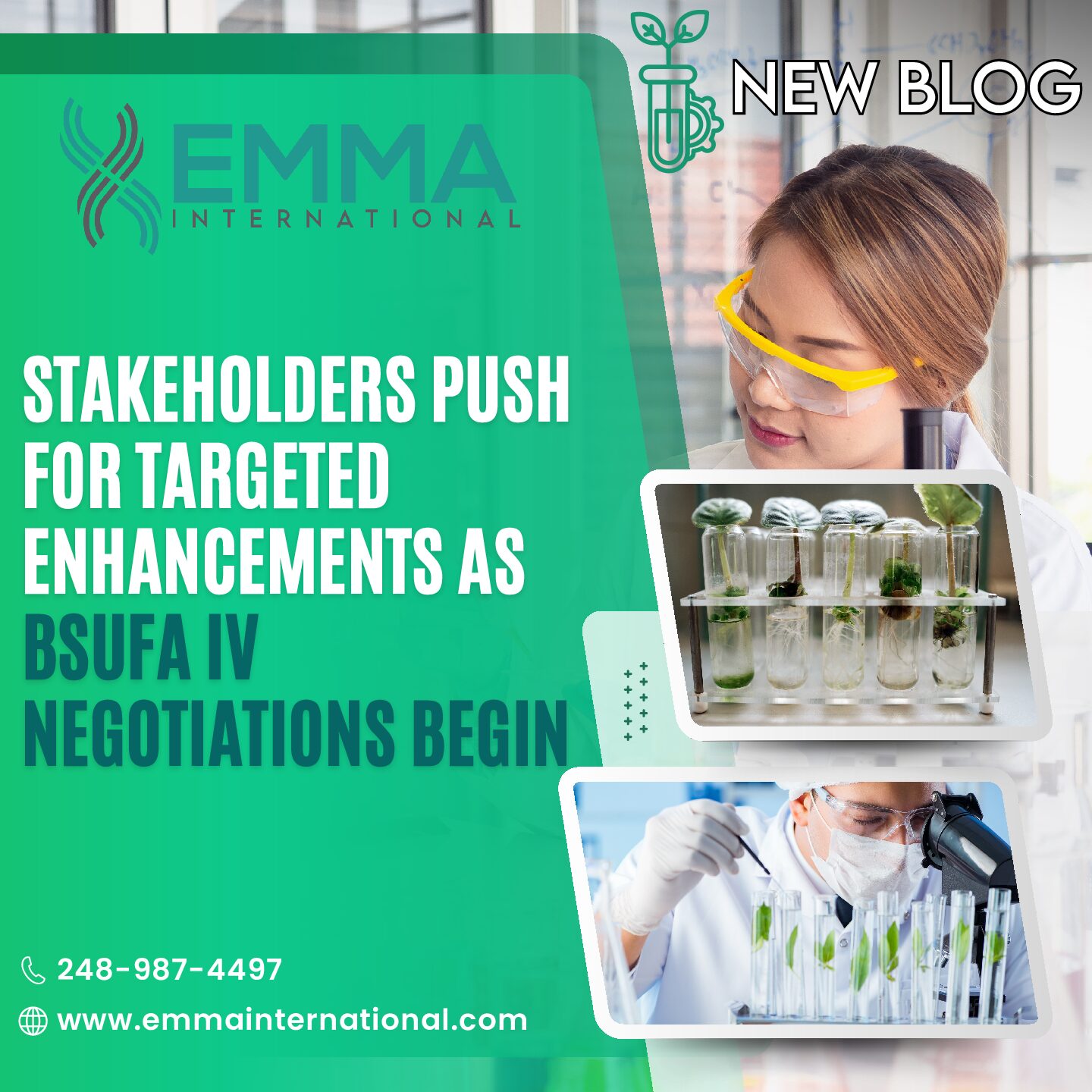
As negotiations begin to reauthorize the Biosimilar User Fee Amendments (BsUFA) for a fourth cycle, industry stakeholders are urging the U.S. Food and Drug Administration to implement targeted changes aimed at reducing development barriers and accelerating patient access to biosimilars. The current BsUFA authorization expires in September 2027, making the next two years critical for shaping the future biosimilar regulatory framework.
In response to FDA’s recent request for public input, stakeholders highlighted several areas where programmatic changes could improve review efficiency, regulatory clarity, and global competitiveness.
Strengthening Review Authority Within FDA
One recurring recommendation was to expand the decision-making authority of the Office of Therapeutic Biologics and Biosimilars (OTBB). Industry groups argued that OTBB has developed deep scientific and regulatory expertise in biosimilar review and should play a more central role in approval decisions.
Currently, biosimilar applications may involve multiple FDA offices, including clinicians focused on specific therapeutic areas. Commenters suggested that this structure can introduce unnecessary layers of review that are better suited to originator biologics than biosimilars, which rely heavily on analytical and comparative evidence rather than standalone clinical efficacy trials.
Aligning Resubmission Timelines With PDUFA
Stakeholders also raised concerns about BsUFA’s current approach to resubmission timelines. Under existing performance goals, all resubmitted 351(k) biologics license applications are subject to a six-month review period, regardless of whether the issues addressed are minor or major.
Industry participants recommended aligning BsUFA more closely with the Prescription Drug User Fee Act framework, where minor resubmissions are reviewed within two months. They argued that the current BsUFA structure unnecessarily prolongs review timelines and delays patient access when deficiencies are limited in scope.
Reevaluating Pharmacokinetic Comparison Expectations
Another key issue raised was FDA’s practice of requesting direct pharmacokinetic comparisons against US-sourced reference products. Stakeholders argued that these studies often add cost and complexity without providing meaningful additional assurance of safety or effectiveness, particularly when robust analytical comparability has already been demonstrated.
Several commenters urged FDA to move away from routine three-way PK studies and adopt a more risk-based approach that reflects advances in analytical science and global regulatory experience.
Addressing Structural Barriers to Biosimilar Adoption
Industry groups also called for broader policy reforms, including eliminating biosimilar suffixes and reconsidering interchangeability requirements. Stakeholders argued that these distinctions are legal and logistical rather than clinical and may hinder biosimilar uptake in the US market without improving patient safety.
These recommendations reflect broader concerns that, despite upcoming patent expirations for many biologics, relatively few biosimilars are currently in development.
What This Means for Biosimilar Developers
As BsUFA IV negotiations move forward, sponsors should expect renewed focus on review efficiency, evidentiary expectations, and policy alignment. Regulatory strategy, evidence planning, and early engagement with FDA will be critical as potential changes take shape.
How EMMA International Supports Biosimilar Strategy
At EMMA International, we support biosimilar developers across the full product lifecycle, including BsUFA strategy, regulatory pathway planning, FDA engagement, and evidence optimization. Our teams help sponsors anticipate regulatory shifts, align development programs with evolving expectations, and position products for efficient review and approval.
For more information on how EMMA International can assist, visit www.emmainternational.com or contact us at (248) 987-4497 or info@emmainternational.com.
Reference:
Regulatory Affairs Professionals Society. Stakeholders weigh in on BsUFA IV enhancements. January 6, 2026.
U.S. Food and Drug Administration. Biosimilar User Fee Amendments and BsUFA reauthorization overview.
IQVIA. Biosimilar development pipeline and market outlook. February 2025.