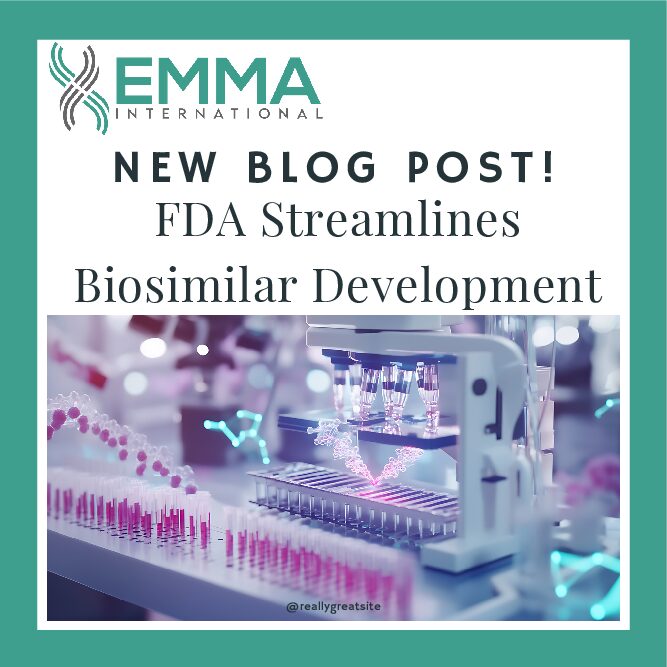
In a major step toward streamlining biosimilar development, the U.S. Food and Drug Administration (FDA) has proposed new draft guidance that could remove the need for comparative efficacy studies (CES) in most biosimilar applications. The move signals a shift toward science-based, analytical methods that rely on advanced testing—reducing the time, cost, and complexity of bringing biosimilars to market.
A Shift Toward Analytical Assessment
The draft guidance, announced at an October 29 press conference led by FDA Commissioner Marty Makary and Health and Human Services (HHS) Secretary Robert Kennedy Jr., outlines a simplified approach centered on comparative analytical assessments (CAAs). Under this framework, manufacturers could demonstrate biosimilarity primarily through laboratory-based analytical testing rather than through traditional, large-scale human trials.
Kennedy emphasized that the change reflects both “modern science and common sense.” He noted that current analytical technologies can already verify whether biosimilars perform “just as effectively and just as safely as the original drug.” By reducing unnecessary human studies, the FDA aims to accelerate biosimilar approvals without compromising patient safety or product quality.
The Rationale Behind the Change
According to the agency, experience gained since the first biosimilar approvals has revealed that CES are often less sensitive than modern analytical tools when detecting subtle differences between products. This recognition, the FDA said, is driving a broader shift in regulatory science—one that prioritizes precision analytics and robust characterization over redundant clinical testing.
The guidance proposes that a CES may not be required when three key conditions are met:
- Comparable Manufacturing and Characterization: Both the reference and biosimilar products are derived from clonal cell lines, are highly purified, and can be characterized thoroughly through analytical methods.
- Established Quality-Efficacy Relationship: The link between product quality attributes and clinical performance is well understood and measurable via validated assays.
- Feasible Pharmacokinetic Comparison: A human pharmacokinetic similarity study can be conducted and provides clinically relevant data.
However, the FDA also acknowledged that some exceptions remain. CES may still be necessary for locally acting drugs where pharmacokinetic studies are not feasible, or when additional endpoints beyond efficacy must be evaluated. The agency encouraged developers to engage in early consultations to clarify study expectations.
Encouraging Faster Biosimilar Development
During the announcement, Makary highlighted the significant challenges that continue to delay biosimilar market entry. Developing and reviewing a biosimilar can currently take five to eight years—a timeline the FDA hopes to shorten through regulatory modernization.
“The goal is to make it easier and faster to bring safe, effective biosimilars to patients,” Makary said. “We are reducing barriers that don’t add scientific value.”
He also underscored the importance of boosting the number of available biosimilars. Despite progress in recent years, there are only 76 FDA-approved biosimilars—a figure Kennedy said should ideally be “several times greater.”
Advancing Interchangeability
Alongside the new draft guidance, the FDA also plans to finalize its long-anticipated guidance on interchangeability. Makary announced that the agency intends to “eliminate the bureaucratic switching studies” that have been required for certain biosimilars seeking interchangeable status.
In recent months, the FDA has already waived switching studies in select cases, indicating a growing willingness to rely on analytical and pharmacokinetic data instead. The forthcoming final guidance will formalize this approach and provide clearer expectations for developers.
Addressing the Biosimilar Gap
Makary’s comments mirrored recent warnings from Dr. Sarah Yim, Director of the FDA’s Office of Therapeutic Biologics and Biosimilars (OTBB), who cautioned about a potential “biosimilar void.” With many biologics nearing patent expiration, insufficient biosimilar development could threaten long-term drug affordability in the United States.
By simplifying requirements, the FDA aims to close that gap—encouraging innovation while ensuring that competition drives down costs for patients.
Conclusion
The FDA’s proposed framework marks a pivotal moment for biosimilar regulation. By replacing many comparative efficacy studies with modern analytical methods, the agency is recognizing that data-driven science can deliver equivalent assurance of safety and efficacy—more efficiently and affordably.
If finalized, this guidance could reshape the U.S. biosimilar landscape, accelerating market entry, reducing development costs, and expanding patient access to life-saving biologics.
For more information on how EMMA International can assist, visit www.emmainternational.com or contact us at (248) 987-4497 or info@emmainternational.com.