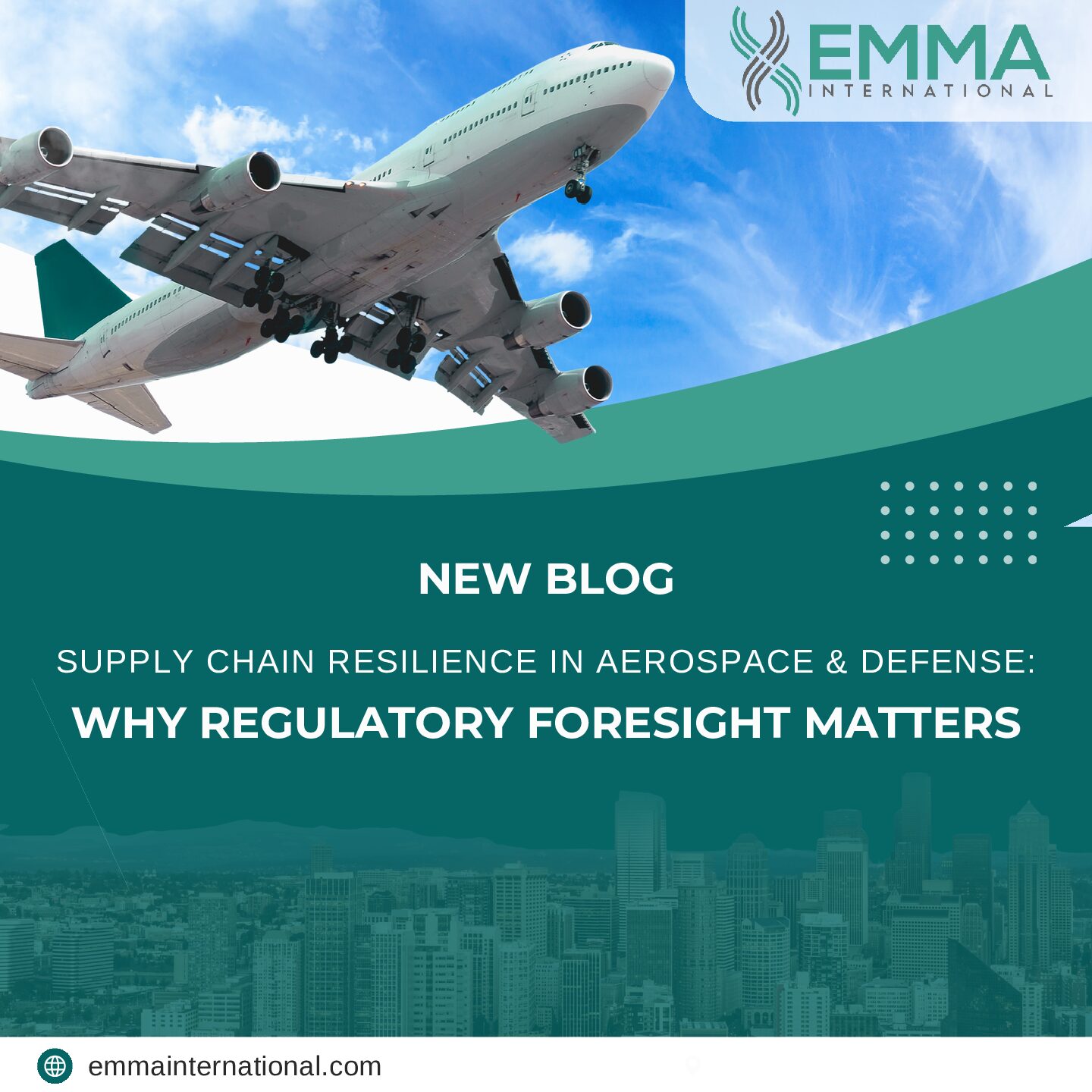
Aerospace and defense organizations are operating in one of the most complex risk environments of any industry. Global supply chain disruption, geopolitical instability, evolving export controls, and heightened cybersecurity threats are reshaping how programs are planned, sourced, and executed. In this sector, supply chain challenges are not only commercial risks — they can directly affect national security, mission readiness, and regulatory standing.
As a result, regulators and government customers are placing increased scrutiny on supplier qualification, traceability, inspection readiness, and overall quality system maturity. Organizations are expected to demonstrate not just compliance, but control, visibility, and resilience across their operations and extended supplier networks.
Quality Systems as a Foundation for Resilience
Quality management systems are no longer viewed as static documentation exercises in aerospace and defense. Standards such as AS9100, combined with requirements tied to ITAR, export controls, and government contracting obligations, are increasingly used as frameworks for risk management and operational stability.
A well-designed QMS enables organizations to identify vulnerabilities early, manage supplier risk, and respond quickly to disruptions without compromising compliance. Companies that treat quality systems as integrated, living systems are better positioned to maintain continuity during inspections, audits, and unexpected operational events.
Digital Transformation Introduces New Governance Expectations
Digital tools, automation, and AI-enabled technologies are playing a growing role in aerospace and defense operations. These technologies are being used to improve supply chain visibility, predict disruptions, and enhance manufacturing efficiency. However, they also introduce new regulatory and governance challenges.
Regulators and contracting authorities expect organizations to maintain clear oversight of data integrity, system validation, and cybersecurity controls. Without appropriate governance, digital transformation can increase exposure rather than reduce risk. Aligning technology adoption with regulatory expectations is now essential for sustainable modernization.
Aligning Compliance, Risk, and Operational Execution
Resilience in aerospace and defense is achieved when regulatory strategy, quality systems, and operational execution are aligned. Organizations that integrate risk management into their compliance frameworks are better equipped to adapt to change, maintain regulator confidence, and support long-term program success.
EMMA International supports aerospace and defense organizations by strengthening quality systems, regulatory strategy, inspection readiness, and risk governance across complex operations and supply chains. By helping organizations anticipate regulatory expectations while managing operational risk, EMMA enables confident execution in one of the world’s most highly regulated industries.
For more information on how EMMA International can assist, visit www.emmainternational.com or contact us at (248) 987-4497 or info@emmainternational.com.
Reference:
U.S. Department of Defense. Industrial Base Resilience and Supply Chain Risk Management
SAE International. AS9100: Quality Management Systems – Aerospace
OECD. Global Supply Chain Resilience and National Security Considerations