FDA Warning Letters are among the most significant regulatory signals an organization can receive. Issued when the U.S. Food and Drug Administration identifies serious violations of regulatory requirements, these letters indicate that corrective actions are needed to address compliance gaps. While Warning Letters are not enforcement actions themselves, they can lead to further regulatory measures if issues are not resolved.
Understanding the most common causes of FDA Warning Letters can help organizations strengthen compliance systems and reduce regulatory risk.
Weaknesses in Quality Management Systems
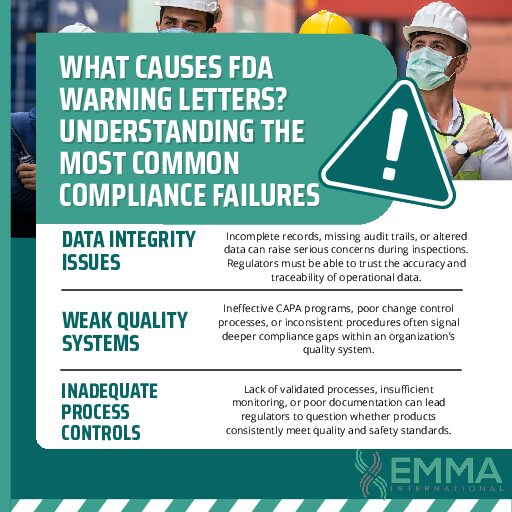
One of the most common drivers of Warning Letters is an inadequate or poorly implemented quality management system (QMS). The FDA expects organizations to maintain structured processes that ensure product quality, regulatory compliance, and operational oversight.
Deficiencies often arise when change control processes, deviation management systems, or corrective and preventive action (CAPA) programs are not consistently implemented. When quality systems fail to identify or address recurring issues, regulators may view this as a systemic compliance problem rather than an isolated incident.
A well-maintained QMS serves as the foundation for regulatory confidence and operational consistency.
Data Integrity and Documentation Failures
Data integrity has become a central focus of regulatory inspections. Organizations must maintain complete, accurate, and traceable records that demonstrate compliance with Good Manufacturing Practice (GMP) requirements.
Warning Letters frequently cite issues such as incomplete documentation, missing audit trails, altered records, or insufficient controls over electronic systems. When regulators cannot verify the accuracy of data supporting manufacturing or testing activities, it raises serious concerns about product quality and safety.
Strong documentation practices and robust data governance systems are essential to maintaining regulatory trust.
Manufacturing and Process Control Gaps
Manufacturing operations must operate within validated and controlled parameters to ensure consistent product quality. When process validation, equipment qualification, or environmental monitoring procedures are inadequate, regulators may question whether products meet required standards.
Common findings include poor batch record documentation, insufficient process monitoring, or lack of validated production controls. These gaps often indicate deeper operational issues that require structured remediation.
Strengthening Compliance Through Proactive Strategy
Preventing FDA Warning Letters requires more than responding to inspections—it requires proactive regulatory and quality oversight across operations.
At EMMA International, we work with organizations across regulated industries to strengthen quality systems, support inspection readiness, and address regulatory observations before they escalate. By implementing structured compliance frameworks and operational discipline, organizations can reduce risk, improve regulatory outcomes, and maintain long-term operational stability.
For more information on how EMMA International can assist, visit www.emmainternational.com or contact us at (248) 987-4497 or info@emmainternational.com.
Reference:
U.S. Food and Drug Administration. Warning Letters Database.
U.S. Food and Drug Administration. Inspections, Compliance, Enforcement, and Criminal Investigations.
Regulatory Affairs Professionals Society (RAPS). Understanding FDA inspection findings and enforcement trends.
21 CFR Parts 210 and 211 — Current Good Manufacturing Practice regulations.