Regulatory inspections are a routine and essential part of operating in highly regulated industries. For organizations operating in life sciences, pharmaceuticals, medical devices, and other regulated sectors, inspection outcomes can have significant operational and commercial implications.
One of the most well-known outcomes of an FDA inspection is the issuance of a Form 483 observation. While receiving a Form 483 does not necessarily mean that enforcement action will follow, it does signal that inspectors have identified conditions that may violate regulatory requirements. Understanding how these observations arise and how organizations should respond is critical for maintaining regulatory confidence and operational continuity.
What Is an FDA Form 483?
FDA Form 483, officially titled “Inspectional Observations,” is issued when FDA investigators observe conditions during an inspection that may indicate potential violations of the Food, Drug, and Cosmetic Act or related regulations.
These observations are typically presented and discussed with company management at the conclusion of an inspection. The document outlines areas where the agency believes corrective action may be necessary to address deficiencies related to quality systems, manufacturing practices, documentation, or regulatory controls.
Importantly, a Form 483 is not a final determination of non-compliance. Rather, it provides organizations with an opportunity to address potential issues before further regulatory action is considered.
Common Areas of FDA Observations
While every inspection is unique, many Form 483 observations arise from recurring areas of concern within quality and operational systems.
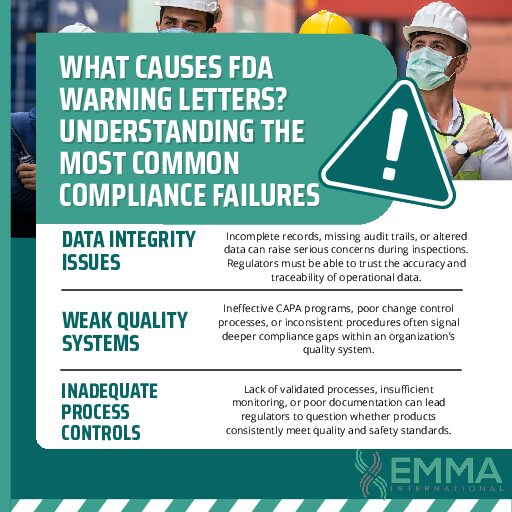
Documentation practices are one of the most frequent sources of observations. Incomplete records, inconsistencies in data integrity controls, or gaps in documentation procedures can raise concerns about the reliability of quality systems.
Another common area involves quality management system implementation. Inspectors may identify weaknesses in change control processes, corrective and preventive action (CAPA) systems, or deviation management procedures.
Supplier oversight and manufacturing controls also frequently appear in inspection findings. Regulators expect organizations to demonstrate consistent oversight of contract manufacturers, raw material suppliers, and critical production activities.
These observations often reflect systemic issues rather than isolated incidents, highlighting the importance of strong operational discipline across the organization.
How EMMA International Supports Inspection Readiness
At EMMA International, we work with organizations across regulated industries to strengthen quality systems, improve inspection readiness, and address regulatory observations effectively.
Our teams support organizations with inspection preparation, remediation strategies, quality system design, and regulatory compliance programs that align with evolving regulatory expectations. By helping organizations identify risks early and implement structured compliance frameworks, we enable companies to navigate inspections with greater confidence and resilience.
In today’s regulatory environment, inspection readiness is no longer a reactive activity. It is an ongoing operational discipline that protects product quality, regulatory standing, and long-term organizational performance.
For more information on how EMMA International can assist, visit www.emmainternational.com or contact us at (248) 987-4497 or info@emmainternational.com.
Reference:
U.S. Food and Drug Administration. FDA Form 483: Inspectional Observations.
U.S. Food and Drug Administration. Inspections of FDA-Regulated Products.
Regulatory Affairs Professionals Society. Understanding FDA inspection observations and regulatory responses.
21 CFR Parts 210, 211, and 820 — Current Good Manufacturing Practice regulations.