
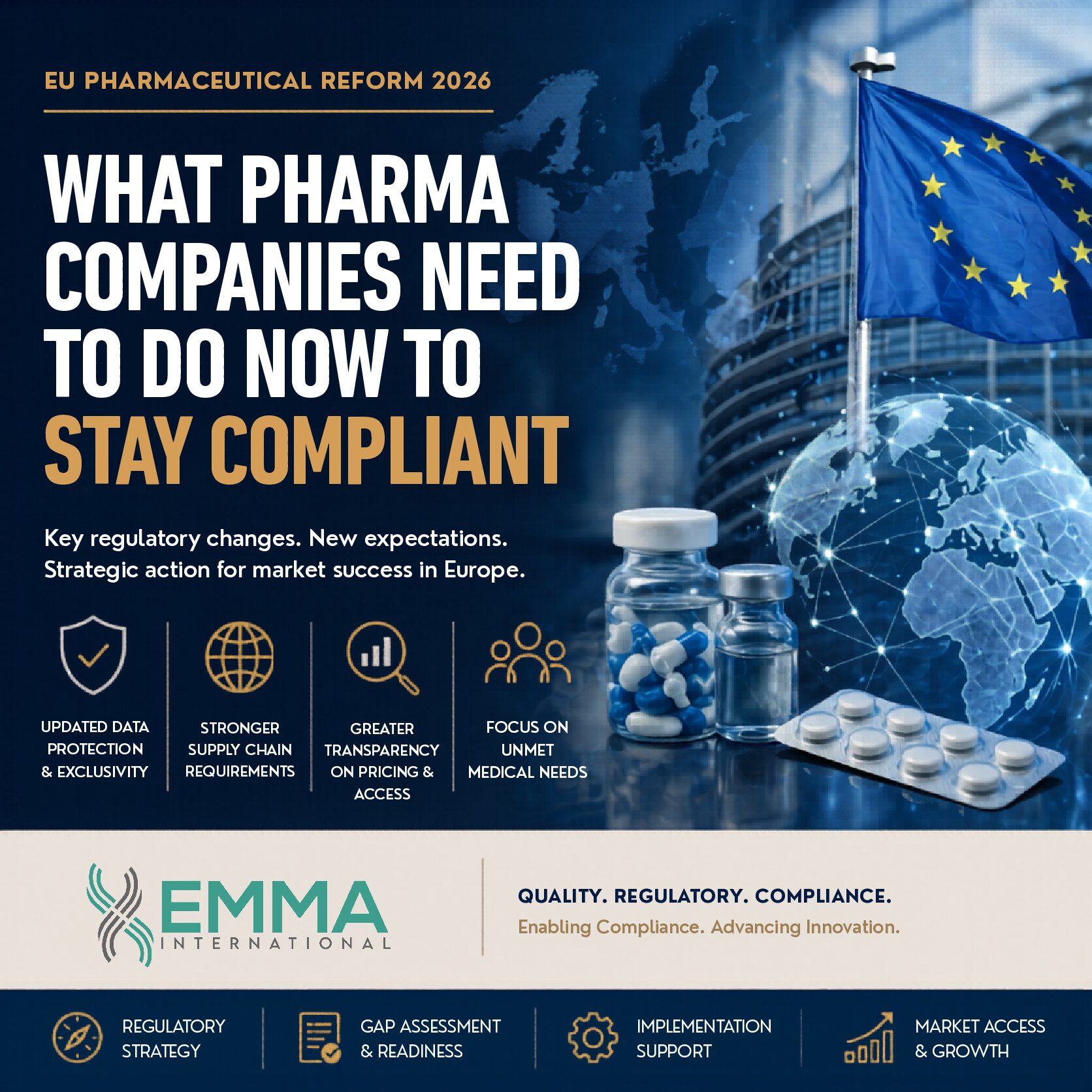
EU pharmaceutical reform is one of the most significant regulatory developments impacting the life sciences industry in 2026. Proposed changes to EU pharmaceutical legislation are expected to reshape how pharmaceutical and biotechnology companies approach market access, compliance, and product lifecycle management across Europe.
As these updates move forward, organizations must prepare for new expectations that extend beyond traditional regulatory requirements.
How EU Pharmaceutical Reform Is Changing Market Access and Compliance
The proposed reform is designed to improve patient access to medicines while strengthening regulatory oversight across EU member states. This includes efforts to streamline approval timelines, encourage innovation, and ensure consistent product availability across the region.
At the same time, regulators are introducing more structured expectations around data, supply continuity, and post-market responsibilities. This creates a more complex compliance environment where speed and control must be balanced effectively.
Key EU Pharmaceutical Reform Changes Impacting Pharma Companies
Several proposed updates are expected to directly impact how organizations operate within the EU market:
- Modified data protection and exclusivity periods linked to product availability
- Stronger supply chain requirements to address shortages and ensure continuity
- Increased transparency expectations related to pricing and access
- Greater emphasis on addressing unmet medical needs
These EU pharmaceutical reform updates are expected to directly impact regulatory strategy, market access timelines, and compliance requirements for pharmaceutical and biotechnology companies operating in Europe.
Operational and Regulatory Challenges
As organizations work to align with these changes, new challenges are emerging across regulatory and operational functions.
Companies may need to adjust product launch strategies to meet revised exclusivity conditions, strengthen supply chain oversight, and ensure broader market availability across EU member states.
For global organizations, aligning EU requirements with existing U.S. and international regulatory frameworks adds another layer of complexity. Without proactive planning, these changes can lead to delays, increased costs, and compliance risk.
How Pharma Companies Should Prepare for EU Pharmaceutical Reform
Preparation begins with understanding how proposed legislation will impact current operations and long-term strategy. Organizations should assess existing regulatory frameworks, identify potential gaps, and align cross-functional teams across regulatory, quality, and commercial functions.
Monitoring ongoing legislative updates and integrating changes into business strategy early will help organizations remain agile and compliant as requirements evolve.
How EMMA International Supports EU Regulatory Strategy
At EMMA International, we support organizations in navigating evolving global regulatory landscapes, including EU pharmaceutical reform. Our teams provide strategic guidance, gap assessments, and implementation support to help organizations align with new requirements.
By combining regulatory expertise with operational insight, we help organizations adapt to change while maintaining compliance, efficiency, and market readiness.
For more information on how EMMA International can assist, visit www.emmainternational.com or contact us at (248) 987-4497 or info@emmainternational.com.
References
European Commission. Revision of the EU Pharmaceutical Legislation.
European Medicines Agency. Regulatory Science Strategy and Policy Updates.
Regulatory Affairs Professionals Society (RAPS). EU Pharmaceutical Reform Overview and Industry Impact.