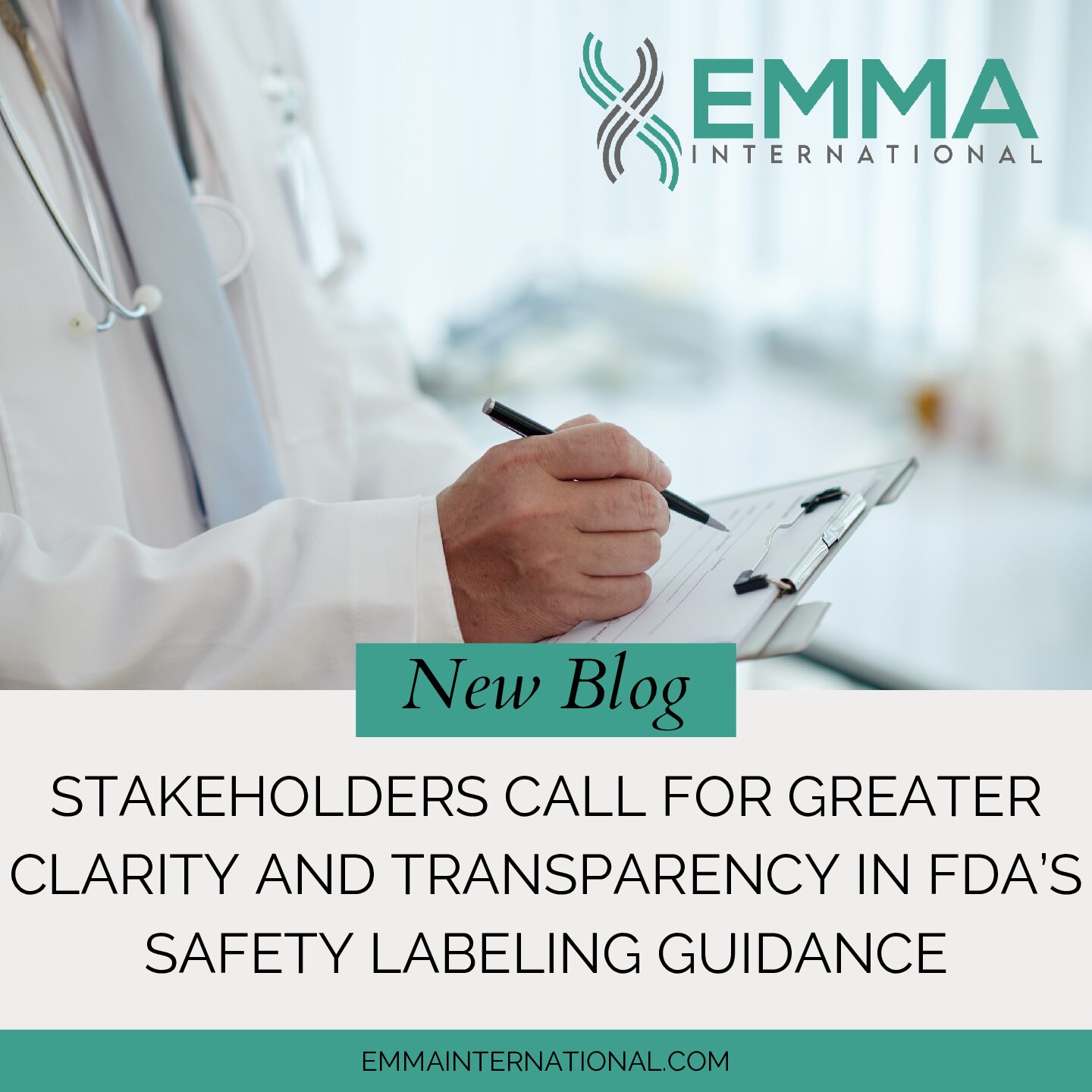
The US Food and Drug Administration (FDA) is receiving significant feedback from industry, patient groups, and academic organizations following the release of its updated draft guidance on safety labeling changes (SLCs). Commenters are seeking more clarity on how the agency identifies new safety signals, how labeling decisions are made, and what information FDA will share publicly throughout the process.
Background on the Updated Draft Guidance
In September 2025, FDA issued draft guidance outlining expectations for manufacturers when updating labeling to reflect emerging postmarket safety information. The update expands on the agency’s 2013 guidance and incorporates new authorities FDA received under the 2018 SUPPORT Act. This includes the ability to require certain NDA, ANDA, and BLA holders to revise prescribing information when new safety concerns arise.
The guidance describes what information must be included in an SLC submission and outlines how FDA intends to communicate safety concerns to application holders. However, several major stakeholder groups say the draft leaves important procedural and scientific questions unanswered.
Key Issues Raised by Commenters
Clarity on the Scope of SLC Authority
The Pharmaceutical Research and Manufacturers of America (PhRMA) asked FDA to clarify that the SLC process does not permit narrowing a drug’s indication. The group noted that any modification to an approved indication must occur through the statutory withdrawal process under section 505(e). PhRMA also expressed concern about language suggesting that changes could extend beyond boxed warnings and adverse reactions.
Criteria for Triggering an SLC Letter
Commenters pointed out that the draft describes “new information” broadly. They requested specific criteria demonstrating that the new information must be both credible and clearly tied to a serious risk. Stakeholders also asked for more insight into how FDA plans to determine when concerns about reduced effectiveness would require an SLC.
Managing Multiple Application Holders
When an SLC affects multiple manufacturers, PhRMA, AAM, and others urged FDA to provide more flexibility in timelines. They emphasized that each holder must have a fair opportunity to submit its own supplement or rebuttal. Concern was raised that simultaneous deadlines could disadvantage companies preparing more substantial responses.
Transparency Around FDA’s Decision-Making
Several groups, including the Yale Collaboration for Regulatory Rigor, Integrity, and Transparency (CRRIT), requested that FDA include a clear summary of its scientific assessment within each SLC notification letter. This would offer insight into how the agency evaluated the safety signal and why a labeling change is needed. Commenters also encouraged FDA to publish SLC letters with confidential details redacted to promote transparency and support clinical decision-making.
Considerations for Biosimilars
The Association for Accessible Medicines (AAM) asked FDA to clarify how the process applies to biosimilars. The group noted that, unlike generics, biosimilars do not have statutory identical-labeling requirements. AAM proposed that FDA notify biosimilar manufacturers once reference product labeling is updated, allowing them to update their own labeling through a supplement.
Requests for Procedural Consistency
Commenters noted several timeline differences between the 2013 and 2025 drafts. These include changes to review periods for SLC supplements and rebuttal statements. Stakeholders asked FDA to explain these changes and ensure consistent internal timelines to avoid unintended delays in communication.
Groups also requested more clarity on:
- What information FDA considers confidential commercial information
- How the agency plans to communicate early with application holders
- How the agency will handle extensions to discussion periods
- How FDA uses surveillance tools such as FAERS or Sentinel to support SLC decisions
Looking Ahead
FDA has not yet announced when it plans to finalize the guidance. Stakeholders continue to express support for the agency’s goal of improving how safety information is communicated but emphasize the need for predictability, transparency, and clear decision-making criteria.
As FDA considers this feedback, manufacturers should monitor developments and review internal pharmacovigilance and labeling processes to ensure readiness once the guidance is finalized.
At EMMA International
EMMA International supports life-science organizations in navigating evolving labeling expectations and postmarket safety requirements. Our team assists with compliance strategy, labeling updates, and quality system integration to help ensure products remain safe, effective, and aligned with FDA expectations.
For more information on how EMMA International can assist, visit www.emmainternational.com or contact us at (248) 987-4497 or info@emmainternational.com.