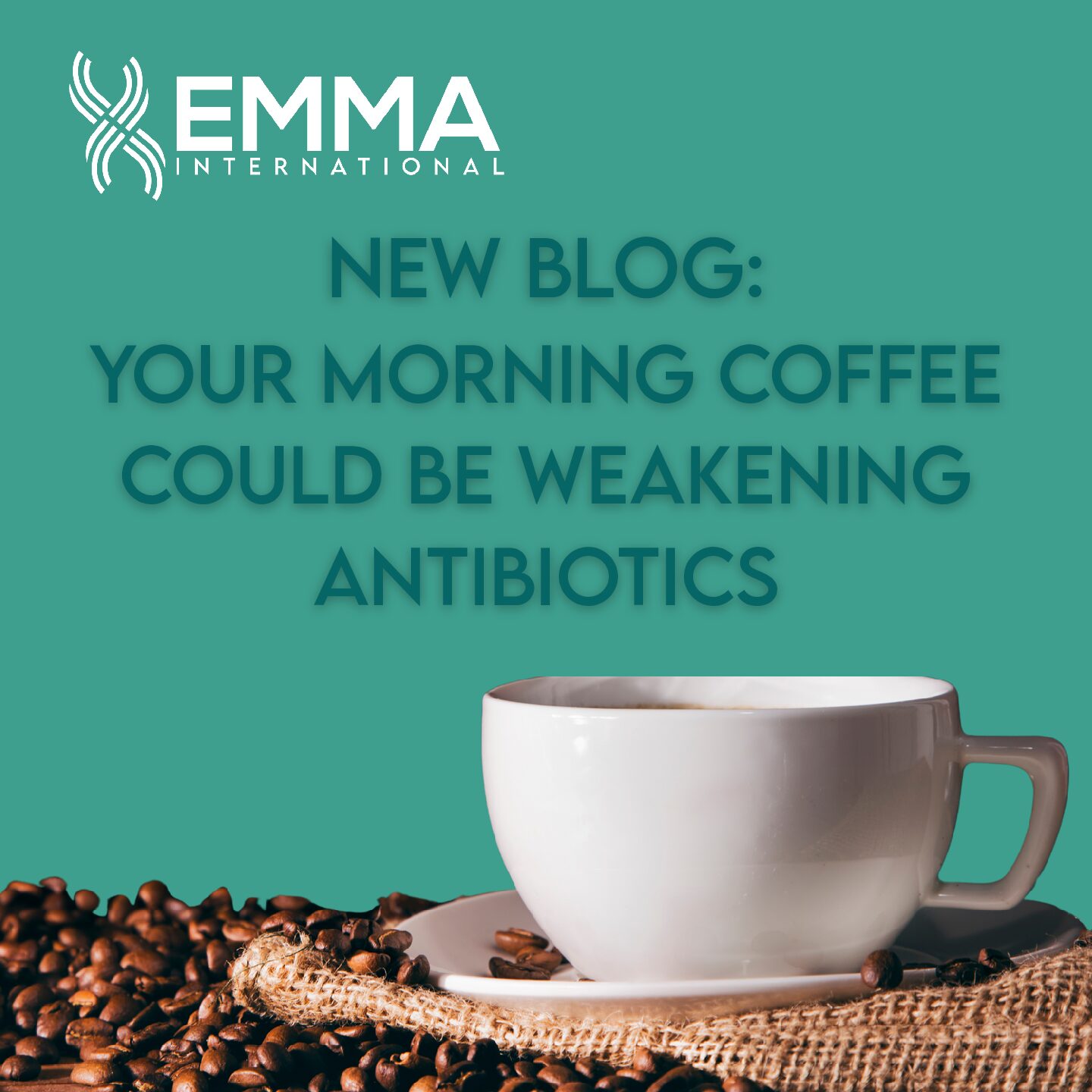
Antibiotic resistance has long been recognized as one of the greatest challenges to global public health. While the focus has often been on the misuse or overuse of antibiotics themselves, new research suggests that everyday substances—like the caffeine in your morning coffee—may also play a role in how bacteria respond to treatment.
Study Overview
A team of researchers from the Universities of Tübingen and Würzburg conducted a systematic study to examine how 94 common substances, including prescription drugs, antibiotics, and dietary ingredients, affect the bacterial response of Escherichia coli (E. coli). The findings, published in PLOS Biology, revealed that some compounds can trigger bacterial gene regulators that control transport proteins. These proteins act like gates, determining what enters and exits bacterial cells.
The researchers found that caffeine specifically activates a regulator known as Rob, which sets off a cascade of changes in bacterial transport systems. The end result was a reduced uptake of ciprofloxacin, a widely used antibiotic, effectively weakening its ability to fight infection.
Antagonistic Interactions
The team described this as an “antagonistic interaction,” where caffeine itself does not directly cause bacterial resistance but alters cellular processes in a way that reduces antibiotic effectiveness. “Our data show that several substances can subtly but systematically influence gene regulation in bacteria,” said Christoph Binsfeld, first author of the study. This means that substances we encounter in everyday life—even those without antimicrobial activity—may impact the success of antibiotic therapies.
Interestingly, the weakening effect observed in E. coli was not replicated in Salmonella enterica, a closely related bacterium. This suggests that bacterial responses to environmental compounds can vary significantly even between similar species, likely due to differences in transport pathways.
Implications for Antibiotic Resistance
These findings shed light on what researchers refer to as “low-level resistance.” Unlike resistance driven by specific resistance genes, low-level resistance emerges from subtle regulatory changes and environmental interactions. This type of resistance can still reduce the effectiveness of treatments and complicate therapeutic decisions, particularly if overlooked.
Professor Ana Rita Brochado, who led the research team, noted that such insights could influence future clinical practices. Understanding how diet and common substances affect antibiotic uptake may lead to new recommendations about what patients should avoid during treatment or encourage the consideration of possible drug–food interactions in prescribing decisions.
Broader Significance
The research underscores the complexity of antibiotic resistance, highlighting that it is not only a result of microbial genetics but also of how bacteria adapt to their chemical environment. As President Karla Pollmann of the University of Tübingen emphasized, “Fundamental research into the effect of substances consumed on a daily basis underscores the vital role of science in understanding and resolving real-world problems.”
The study also provides a framework for further exploration of how other dietary or pharmaceutical compounds may impact antibiotic function. Given the global push to preserve antibiotic effectiveness, these findings could eventually influence both clinical guidelines and public health strategies.
Conclusion
While your morning coffee is unlikely to be banned anytime soon, the study highlights a surprising dimension of antibiotic resistance research: everyday substances can have meaningful effects on bacterial behavior. Recognizing and accounting for these interactions may prove essential in developing more effective treatment strategies against persistent bacterial infections.
At EMMA International, we help life sciences companies anticipate and adapt to emerging research and regulatory trends. From drug–device interactions to evolving guidance on clinical trial design, our team provides the expertise needed to align innovation with compliance and public health priorities.
For more information on how EMMA International can assist, visit www.emmainternational.com. Contact EMMA International at (248) 987-4497 or by email at info@emmainternational.com to learn more.
References
University of Tübingen. (2025, September 11). Your morning coffee could secretly be weakening antibiotics. ScienceDaily. Retrieved from www.sciencedaily.com/releases/2025/09/250911080113.htm